· 9 min read
What Is Merienda? An Australian Guide to Filipino Snack Time
What is merienda? Discover the Filipino light-meal tradition, popular sweet and savoury choices, regional variety and practical tips for enjoying it in Australia.
What is merienda? The short answer
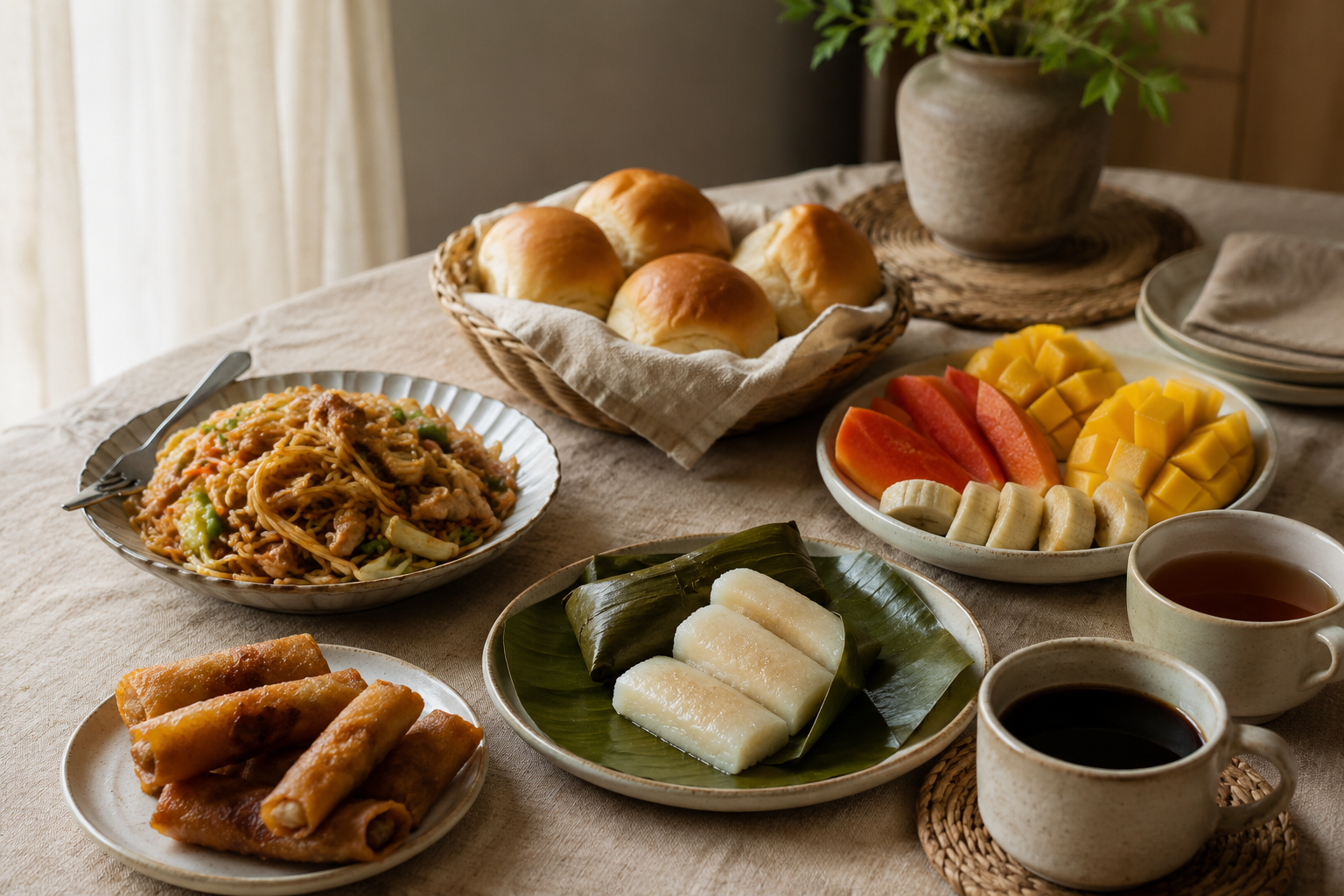
Merienda, also written meryenda in Filipino, is a light meal or substantial snack eaten between main meals. In the Philippines it may be enjoyed in the morning, in the afternoon or when a work, school or travel schedule creates a natural pause. It is a time of eating, not the name of one particular dish.
A merienda can be as simple as a bread roll and coffee or as filling as noodles, rice cakes or a warm bowl of soup. It may be sweet, savoury or a little of both. The serving is usually smaller than a main meal, but there is no universal menu, portion or clock time that every Filipino household follows.
For Australians, ‘afternoon tea’ is a useful comparison, although it is not an exact translation. Merienda covers a wider range of foods and can happen before lunch as well as between lunch and dinner. The best way to understand it is as a flexible everyday break shaped by appetite, routine, region and family preference.
Read the beginner’s guide to Filipino food →Explore 12 questions about Philippine culture →
Merienda or meryenda: what does the word mean?
The spelling merienda reflects the Spanish word for a light meal, while meryenda is a familiar Filipino spelling that follows local pronunciation. Both forms are readily understood in Philippine food conversations. Oxford Reference traces the related Spanish and Italian forms to the Latin merenda, but the living Filipino practice should not be reduced to word history alone.
Centuries of exchange and colonial rule changed Philippine languages and cooking, yet Filipinos adapted outside influences within local ingredients, schedules and tastes. That is why a Spanish-derived name can now point to foods as varied as pancit, sticky-rice delicacies, fried bananas, bread, soup and contemporary bakery snacks. The category is Filipino in the way it is practised and understood.
You may also encounter minindal or minandal in Philippine languages and regional usage. It is safer to listen to the term a person or family uses than to insist on one label for the entire archipelago. The Philippines is linguistically and culturally diverse, so vocabulary, favourite foods and the size of the break naturally differ.
When do Filipinos eat merienda?
There is no official merienda alarm. A morning break may fall between breakfast and lunch, while afternoon merienda bridges lunch and dinner. School timetables, shift work, transport, climate and household routines influence the timing. In some homes the afternoon version is the one most often meant when someone simply asks what is for merienda.
Research published in the Department of Science and Technology’s Philippine Journal of Science illustrates how ordinary snacking remains for children: its study found that about 70 per cent of the Filipino children surveyed ate snacks once a day, usually in the afternoon. That finding describes the study population; it does not turn one pattern into a rule for all ages or households.
Merienda is also not automatically an extra feast. It can replace the need to graze continuously, use a small portion of suitable leftovers or offer something practical after school. Appetite and the next main meal matter. If dinner is close, a lighter option may make more sense than a full noodle dish.
Popular sweet Filipino merienda foods
Kakanin is a broad family of rice-based delicacies often associated with snacks, markets, gatherings and regional food traditions. Examples include suman, puto, kutsinta, biko, sapin-sapin and bibingka, but those names cover many local methods. Ingredients, colour, toppings, shape and wrapping can change from one province, town or household to another.
The National Museum of the Philippines documents rice cakes and other foods wrapped in banana, coconut, buri or taro leaves and corn sheaths. Its account explains that these materials can secure food, support cooking and contribute aroma. Suman alone has multiple named forms, so a leaf-wrapped rice cake should not be presented as one standard national recipe.
Other sweet choices include turon, which wraps banana in a spring-roll-style wrapper and fries it with caramelised sugar; maja blanca or maja mais, a coconut-based pudding; and halo-halo, shaved ice assembled with varied sweet additions. SBS Food identifies maja mais as a morning or afternoon merienda food and describes the many possible combinations in halo-halo.
Bread and bakery foods also belong comfortably at the merienda table. Pandesal, ensaymada and filled or toasted sandwiches can be everyday options. A food does not need to be old, ceremonial or made from rice to count. One SBS writer recalls after-school ‘flying saucer’ sandwiches made in a round press, showing how family memory and adaptation sit naturally within the practice.
Learn what ube really is →Discover calamansi in Filipino cooking →
Popular savoury and filling merienda foods
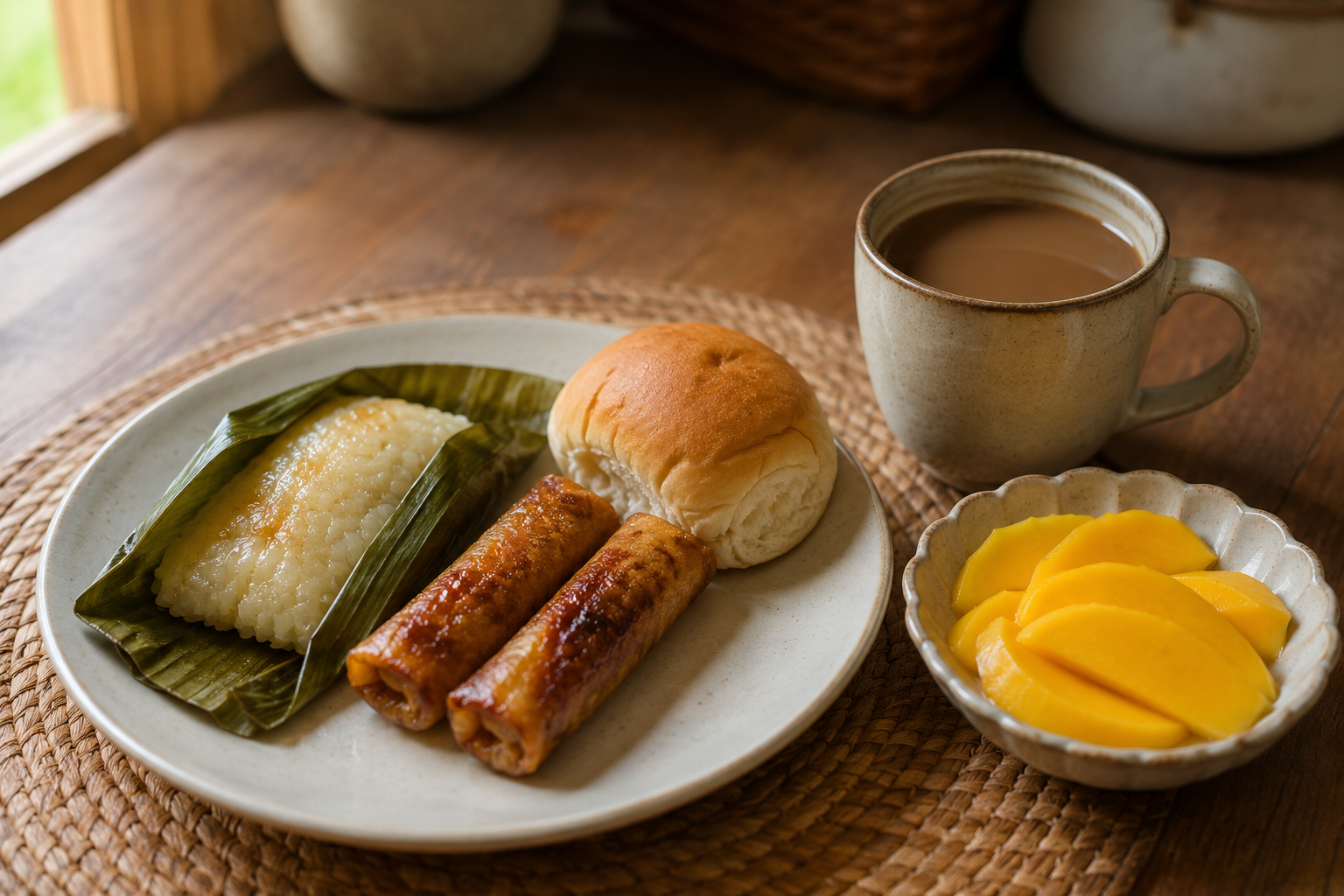
Merienda is not another word for dessert. Pancit dishes are familiar savoury choices, from fine rice-noodle pancit bihon to other regional and household styles. A modest bowl can bridge a long afternoon, and noodles are easy to share when several people stop at once. The exact recipe and serving size depend on the setting.
Lumpia, empanadas, siopao, toasted sandwiches and various street snacks may also appear. Each category contains distinct versions: lumpiang Shanghai is not the same as fresh lumpia, and sweet turon is different again. Naming the actual food is more helpful than treating every fried wrapper or filled bun as interchangeable.
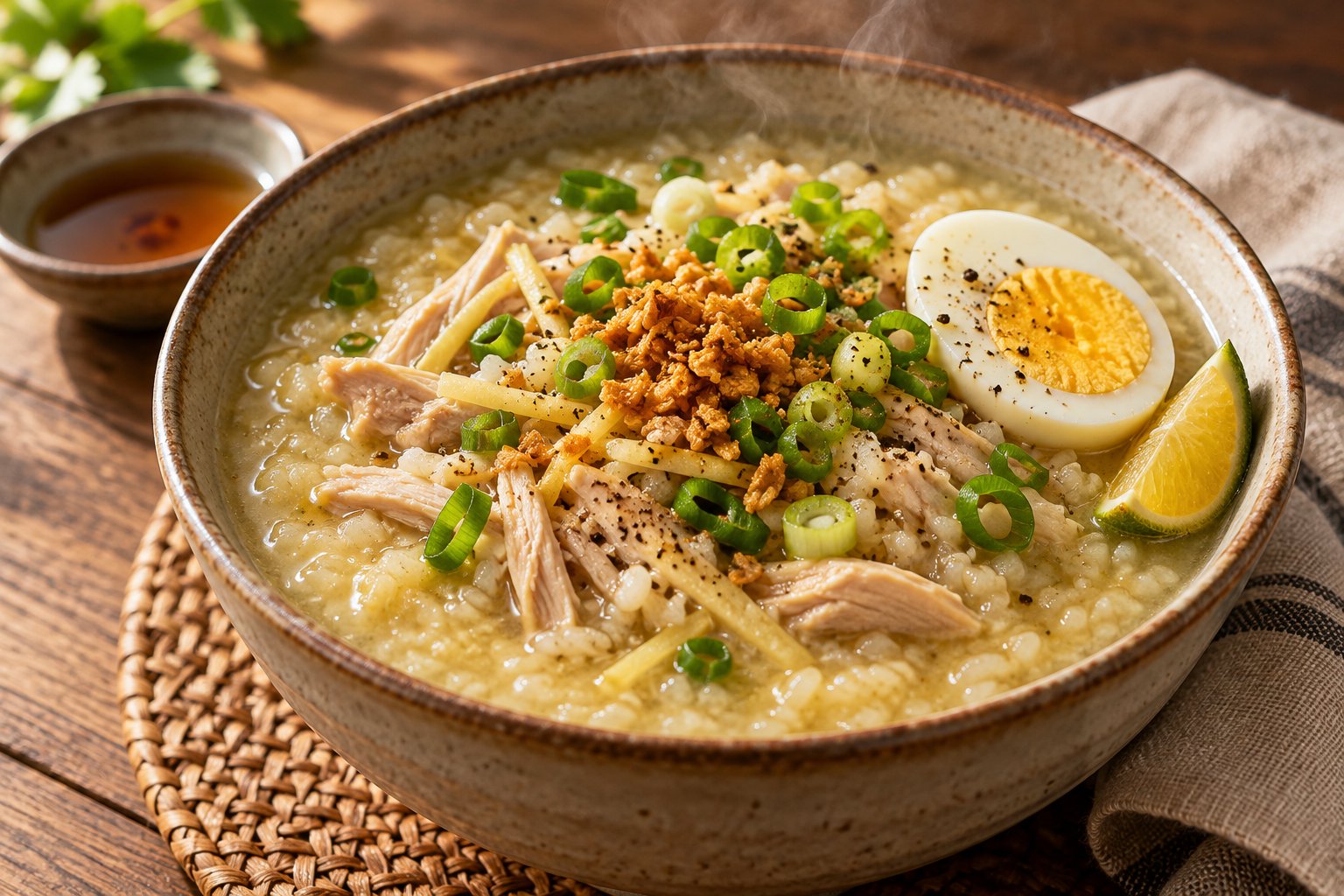
Some merienda choices are close to a light meal, including arroz caldo, champorado, sopas or a serving of palabok. Whether a dish is ‘snack’ or ‘meal’ depends partly on portion and context. A warm bowl after school, a plate shared at work and a larger spread for visitors can all carry the same merienda idea without looking identical.
Leftovers can be practical when they are handled safely. SBS describes a family toastie filled with leftover chicken adobo, dried in the pan so the bread does not become soggy. That is one personal example, not a traditional requirement. Australians can use it as a reminder that merienda can be resourceful as well as recipe-driven.
Make Filipino pancit bihon →Make Filipino chicken adobo →Try a lumpiang Shanghai recipe →
What makes merienda culturally meaningful?
The food matters, but so does the pause. Merienda can create a manageable moment to sit with family, check in with colleagues, welcome a visitor or give children something to eat after school. It does not need a formal table setting. Buying snacks from a bakery, sharing a pot of noodles or passing around fruit can serve the same social purpose.
That meaning should not be romanticised into a claim that every Filipino takes the same break or that every merienda is communal. People may eat alone, on transport, at a desk or between jobs. Cost, access, dietary needs and time affect what is possible. Cultural respect begins with recognising ordinary variation rather than turning a daily habit into a performance.
For Filipino Australians, merienda can also provide continuity through familiar flavours while allowing adaptation to local ingredients and routines. A Bunbury household might pair pandesal with Australian coffee, prepare pancit for visiting relatives or serve mango beside rice cake. Adaptation does not make the occasion less meaningful when people are honest about what they are serving.
How to plan a simple merienda in Australia
Start with the people and the time available. For one or two people, choose one filling item and a drink: bread and coffee, fruit with a rice cake, or a small bowl of noodles. For a group, combine two or three contrasting choices such as pancit, turon and fruit rather than trying to reproduce an encyclopaedia of Filipino snacks.
Check dietary needs before buying or cooking. Common merienda foods may contain wheat, egg, milk, soy, sesame, peanuts, tree nuts, fish, crustaceans or sulphites, depending on the recipe and product. In Australia, read the ingredient list and bold ‘Contains’ statement on packaged food. Ask the cook or caterer instead of guessing from a dish’s appearance.
Match the preparation to your equipment and confidence. Fresh fruit, packaged bread and reheated noodles require different handling from deep-fried snacks. If frying, keep water away from hot oil, use a stable pan and never leave it unattended. If you want a larger spread without cooking every component, ask what a local Filipino grocer or caterer currently offers.
Keep the invitation relaxed and name foods accurately. ‘Merienda with pancit and turon’ tells guests more than promising an ‘authentic Filipino experience’. If someone shares a family version, receive it as their experience rather than a test against a single national standard.
Visit the Hernandez store →Explore Filipino catering packages →Request a tailored catering quote →
Food safety for snacks, leftovers and shared platters
Food Standards Australia New Zealand advises keeping perishable food at 5°C or colder or hot food above 60°C. Time between 5°C and 60°C is cumulative. Under the two-hour/four-hour rule, food out for less than two hours may return to refrigeration, food out for two to four hours should be used immediately, and food out for more than four hours should be discarded.
Cool cooked food quickly in shallow containers and refrigerate it rather than leaving it on the bench for an afternoon. Reheat chilled leftovers rapidly until piping hot, and follow the storage directions and use-by date on packaged products. Separate raw meat, seafood and eggs from fruit, bread and other ready-to-eat merienda items.
For a shared table, put out smaller batches and replenish them rather than exposing everything at once. Use separate serving utensils and retain ingredient information for packaged foods. A homemade label can identify the dish and its known allergens, but people with allergies still need accurate information about every ingredient and cross-contact in the preparation area.
Finding Filipino merienda ingredients in Bunbury
Many simple merienda ingredients are familiar Australian groceries, while Filipino breads, rice cakes, noodles, sauces and frozen snacks may require a specialist store. Stock and brands change, so a guide should not promise a particular product. Phone before travelling if one ingredient is essential, and read the label when substituting.
Hernandez Asian Delights is at 36 Charles Street, Bunbury. Phone 08 9768 0755 to ask about current grocery availability or catering options. The store can explain what is actually on hand; this article provides cultural context rather than a live inventory or price list.
For a gathering, merienda can sit between a cup of tea and a full catered meal. Explain the number of guests, serving time, venue and dietary needs when requesting a quote. If you add Hernandez pork crackle, serve and label it as a distinct pork dish rather than implying that it is a standard requirement of merienda.
Use the Filipino pantry guide for Bunbury →Discover Hernandez pork crackle →
Frequently asked questions
Is merienda the same as afternoon tea?
Afternoon tea is a helpful comparison, but merienda is broader. Filipinos may eat it in the morning or afternoon, and the food can range from bread, fruit and rice cakes to noodles, soup or fried snacks. It is usually lighter than a main meal, without one compulsory menu.
What is the difference between merienda and meryenda?
They refer to the same light-meal or snack-time idea. Merienda follows the Spanish spelling, while meryenda is a common Filipino spelling reflecting local pronunciation. Regional languages may use other terms as well.
What time is Filipino merienda?
There is no fixed national time. Morning merienda falls between breakfast and lunch, while afternoon merienda comes between lunch and dinner. School, work, travel and household schedules determine the actual break.
Is Filipino merienda always sweet?
No. Sweet choices include rice cakes, turon and coconut puddings, but savoury foods such as pancit, lumpia, empanadas, siopao, toasties and warm soups can also be served. Many tables mix sweet and savoury items.
What is an easy Filipino merienda for beginners?
Choose one modest combination rather than a feast: pandesal or another soft bread with coffee, fruit with a rice cake, or a small portion of pancit. Check labels for allergens, follow storage directions and describe the foods by their actual names.
Keep exploring Filipino food and culture
Taste it in Bunbury
Bring Filipino flavour to your next gathering.
Explore catering from Hernandez Asian Delights or visit Michael and the team at 36 Charles Street, Bunbury.