· 9 min read
Filipino Chicken Adobo Recipe: An Australian Home-Cook Guide
Cook Filipino chicken adobo at home with an Australian-friendly method, clear ingredient guidance, authentic context and practical food-safety advice.
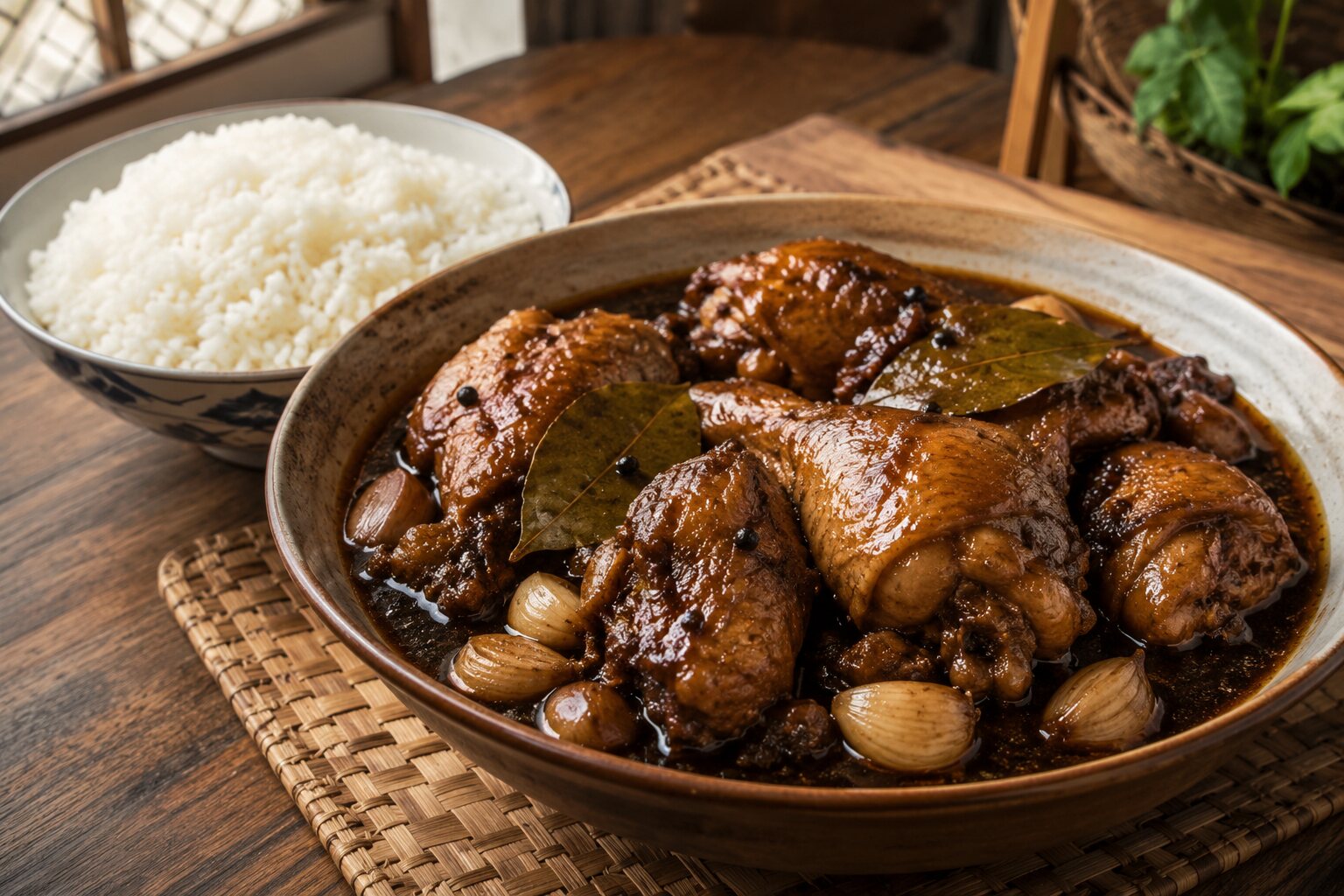
Filipino chicken adobo recipe: the short answer
Filipino chicken adobo is made by braising chicken with vinegar, soy sauce, garlic, bay leaves and black pepper until the meat is tender and the cooking liquid becomes a deeply savoury, tangy sauce. It is commonly served with steamed rice. The method is approachable for an Australian home cook because the core ingredients are easy to find, yet the balance of vinegar, salt, garlic and reduction gives the dish a character of its own.
The recipe below follows the proportions in Filipino cook Ricky Ocampo’s chicken adobo prepared for SBS Food Safari: one small chicken, eight garlic cloves, two bay leaves, 60 ml soy sauce and 250 ml vinegar. Ocampo allows cane, apple cider or white balsamic vinegar. We have translated the process into a detailed home-kitchen guide and added current Food Standards Australia New Zealand safety advice. It is one sound version of adobo, not a claim that every Filipino family cooks the dish identically.
Expect a sauce sharper than a sweet commercial stir-fry sauce. Adobo should taste rounded after simmering, but vinegar remains part of its identity. Serve it with plain rice, which absorbs the sauce and balances its intensity. If this is your first Filipino dish, read the beginner’s guide so the savoury-sour flavour profile makes sense.
Why there is no single universal adobo
Adobo is often described as a signature or national dish of the Philippines, but that shorthand should not be mistaken for a single regulated formula. A 2026 Philippine Embassy in Tokyo feature described adobo as meat or vegetables typically simmered with vinegar, soy sauce and garlic, with bay leaves and eggs among the possible additions. It also noted that versions occur across the Philippines. The Philippine National Nutrition Council similarly discusses adobo sa gata with coconut milk, white adobo without soy sauce, chicken-and-pork adobo and vegetable versions.
That variety is important. Some cooks want plenty of sauce; others reduce it until it clings closely to the meat. Some brown the chicken before braising; others place the ingredients together and simmer. Soy sauce is familiar in many contemporary versions, while adobong puti relies on vinegar, salt, garlic and pepper. Coconut milk, chillies, annatto, eggs, potatoes or a touch of sugar can appear depending on region, household and preference.
The safest way to talk about authenticity is therefore to identify whose version you are cooking. This article uses Ocampo’s SBS recipe as its tested reference and explains optional adjustments separately. Do not present an addition as compulsory simply because you enjoy it. Filipino home cooking carries family memory, regional ingredients and personal technique; the variations are part of the tradition rather than errors waiting to be standardised.
Ingredients for this Australian kitchen version
For four people, use one small chicken cut into eight pieces, or about 1.4–1.6 kg of mixed bone-in thighs and drumsticks; 60 ml neutral cooking oil; eight garlic cloves, coarsely chopped; two bay leaves; 60 ml soy sauce; 250 ml cane vinegar, apple cider vinegar or white balsamic vinegar; freshly ground black pepper; and steamed rice to serve. Ocampo’s published recipe also seasons with salt, but taste the sauce first because soy sauces vary greatly in salinity.
Bone-in chicken gives the sauce and meat time to develop together during the covered simmer. If you substitute boneless pieces, the cooking time will change, so use tenderness and a thermometer rather than the original clock alone. Australian tablespoons are 20 ml, which differs from the 15 ml tablespoon used in some countries. Measuring the soy and vinegar in millilitres avoids that conversion problem.
Cane vinegar offers a useful Filipino pantry connection and is worth trying when available. Apple cider vinegar is an accessible alternative in Australian supermarkets. White balsamic is another option named in the SBS recipe. Avoid substituting ordinary dark balsamic without understanding that its colour and sweetness will change the dish. Whatever vinegar you choose, use a food vinegar intended for cooking, not a household cleaning product.
How to cook Filipino chicken adobo step by step
Pat the chicken dry with paper towel. Heat the oil in a wide, heavy frying pan or casserole over medium-high heat. Work in batches if necessary so the pieces sit in a single layer rather than steaming in a crowded pan. Brown the chicken for about six to eight minutes in total, turning until several sides have good colour. Transfer pieces temporarily if you need space for the remaining batch.
Return all chicken to the pan, add the chopped garlic and cook for one to two minutes, watching that it does not burn. Add the bay leaves, plenty of black pepper and the soy sauce. Let the soy simmer around the chicken for about two minutes. Pour in the vinegar and bring the liquid to a boil. Reduce the heat to low, cover the pan and simmer for about 30 minutes, turning the pieces during cooking so they are evenly coated.
Remove the lid when the chicken is tender and reduce the sauce if it still seems thin. Ocampo’s reference recipe aims for the liquid to reduce by roughly half. Keep the heat controlled and turn the chicken gently; a wide pan reduces faster than a narrow pot. Taste the sauce with rice before deciding it needs salt, sweetness or more acidity. The sauce will taste stronger by itself than it does across a full plate.
Before serving, check the thickest part of the largest chicken piece with a clean probe thermometer, avoiding the bone. FSANZ recommends cooking poultry to at least 75°C in the centre. Browning is not proof that the inside is safe. Once every piece is fully cooked, rest the pan briefly, spoon the sauce over the chicken and serve with freshly cooked rice.
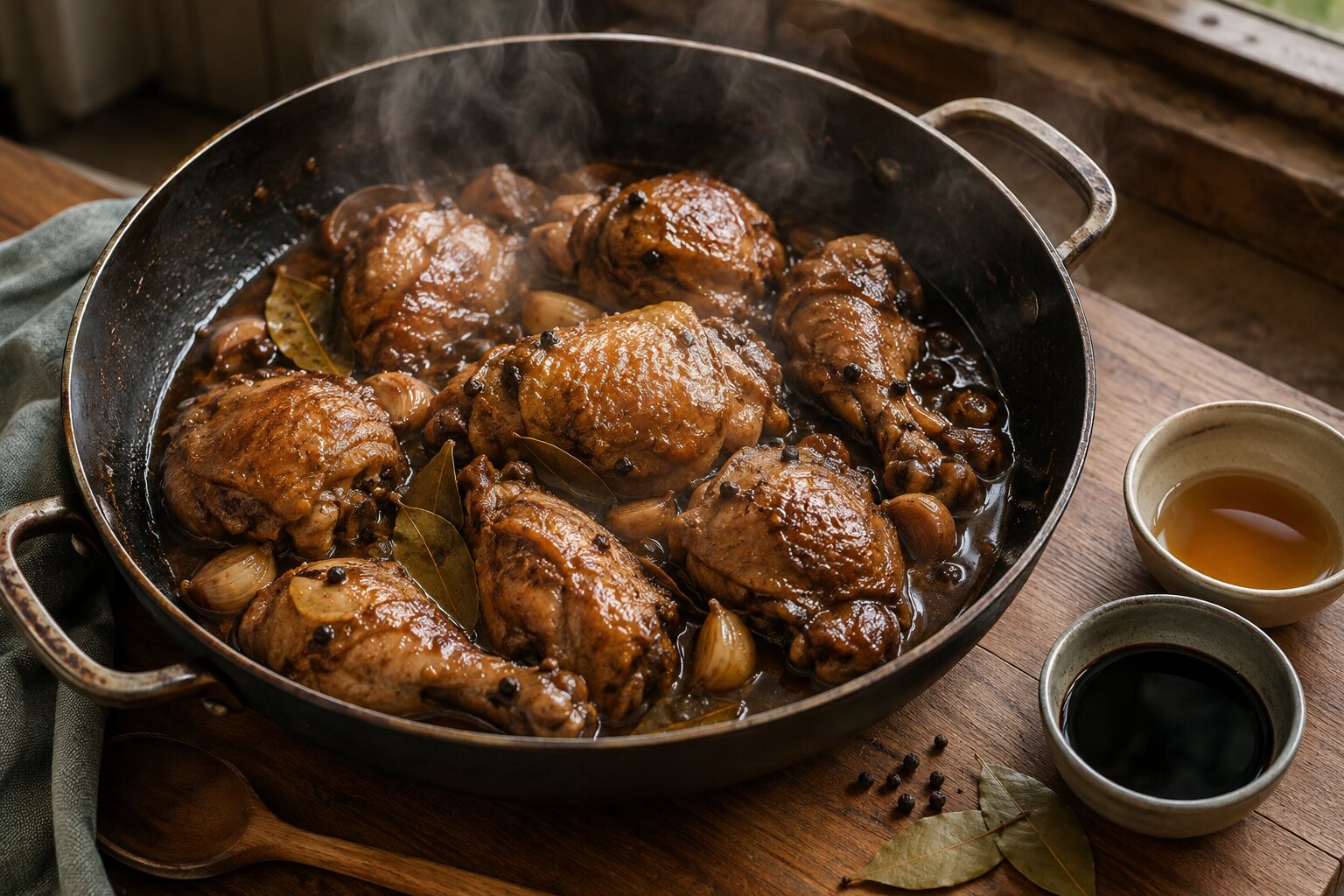
How to balance the adobo sauce
Good adobo is not created by hiding the vinegar. The aim is to let acidity, salt, garlic, pepper and chicken meet in a sauce that tastes complete with rice. If the first taste seems aggressive, check whether the sauce has reduced and the chicken has had enough time to braise. Raw-tasting vinegar often becomes more integrated during cooking. Avoid repeatedly adding sugar before the sauce has finished, because you can turn a savoury braise into an unintentionally sweet glaze.
If the finished sauce is too salty, adding more soy will obviously make it worse. A small amount of water can loosen an over-reduced sauce, after which it should be heated through again. If it is too sharp for your household, serve a smaller amount of sauce with more rice or try a gentler vinegar next time. If it tastes flat, a little further reduction may concentrate it, but monitor saltiness as the water evaporates.
Write down the vinegar and soy brands you used. Their acidity, salt and sweetness differ, so another bottle may not produce the same result. This simple kitchen note is more reliable than endlessly changing a family recipe. Once you understand the base version, you can explore a saucier style, a drier reduction or a version with coconut milk from a credible recipe that identifies its regional or family context.
Common chicken adobo mistakes
Most adobo problems are technique problems rather than a need for more ingredients. Control pan size, heat, reduction and food safety first. Then adjust the flavour deliberately on a future batch instead of changing several variables at once.
Crowding the pan
Chicken releases moisture as it heats. If every piece is packed tightly into a small pan, the temperature drops and browning becomes difficult. Use a wide pan or brown in batches. The fond left behind contributes savoury flavour when the sauce is added.
Burning the garlic
Garlic can become bitter when it darkens too far. Add it after the chicken has developed colour, then cook it briefly before the liquid ingredients go in. If the pan has become extremely hot, lower the heat before adding the chopped garlic.
Assuming vinegar preserves unsafe chicken
Vinegar is central to adobo’s flavour, but a home cook must not treat the marinade or sauce as a substitute for refrigeration and proper cooking. Keep raw chicken cold, prevent it touching ready-to-eat food and verify a safe internal temperature. Do not reuse raw marinade as an uncooked dipping sauce.
Reducing without tasting with rice
Adobo sauce is concentrated. Judge it as it will be eaten: spoon a little over plain rice, taste and then adjust. Reducing past the right point can make even a well-proportioned recipe too salty.
Food safety, cooling and leftovers
Keep raw chicken refrigerated at 5°C or colder and separate it from cooked food, salad ingredients and utensils that will not be cooked. FSANZ advises Australians not to wash raw chicken because splashing can spread harmful microorganisms around the kitchen. Wash your hands after handling it, clean the preparation area and never put cooked chicken back onto an unwashed plate that held it raw.
If adobo will be kept for another meal, cool it quickly in shallow containers rather than leaving a deep, hot pot on the bench. FSANZ’s consumer guidance says perishable food held between 5°C and 60°C for less than two hours can be refrigerated again; between two and four hours it should be eaten immediately; and after four hours it should be thrown away. The times are cumulative.
Refrigerate leftovers promptly and use them within a few days. Reheat only the portion you need, and heat it quickly until piping hot. A business catering an event has additional obligations under the Food Standards Code, so home guidance should not be copied into a commercial food-safety plan. When Hernandez caters an event, discuss confirmed service arrangements and dietary needs directly rather than assuming a blog recipe represents the commercial kitchen’s exact method.
What to serve with chicken adobo
Steamed white rice is the clearest accompaniment because it catches the sauce and softens its intensity without competing for attention. Add a simply cooked green vegetable or a fresh side if you want contrast. The plate does not need another rich sauce. A small serve of adobo with rice also works well as part of a broader shared table alongside noodles, vegetables and a crisp item.
Calamansi is not compulsory in this recipe, but some diners enjoy fresh citrus with rich Filipino food. If you offer it, let people squeeze their own amount rather than changing the entire pan. Pork crackle belongs to a different cooking tradition and texture, yet it can form part of a larger Filipino-inspired spread when the menu is balanced. Ask the caterer what combinations are available instead of assuming every dish or condiment is offered every day.
For a Bunbury gathering, the most useful next step is to choose the experience you want guests to have: a familiar main with one new flavour, a broad Filipino menu or a more informal shared feast. Hernandez can help shape that request around group size and confirmed availability. The home recipe is an invitation to learn; catering is the better option when you need quantity, coordinated service and a menu planned for an event.
Explore Hernandez catering packages →Discover Hernandez pork crackle →Visit the Hernandez Asian grocery store in Bunbury →
Frequently asked questions
What vinegar is best for Filipino chicken adobo?
Filipino cane vinegar is a useful traditional choice when available. The SBS Food Safari recipe used for this guide also allows apple cider vinegar or white balsamic vinegar. Different vinegars change the sharpness and sweetness, so record what you use and adjust future batches by taste.
Do I need to marinate chicken adobo overnight?
Not for this version. Ricky Ocampo’s SBS recipe browns the chicken, adds the seasonings and braises it without an overnight marinade. Other family and published recipes do marinate, which is another valid approach. Always marinate raw chicken in the refrigerator, never on the bench.
Can I make chicken adobo without soy sauce?
Yes. Adobong puti, or white adobo, is a recognised style that relies on vinegar and seasonings without soy sauce. Use a reliable recipe written for that style rather than simply removing soy from this recipe, because the salt and liquid balance will need to change.
How do I know chicken adobo is cooked safely?
Check the thickest part of the largest chicken piece with a clean probe thermometer, without touching bone. FSANZ recommends poultry reach at least 75°C in the centre. Tenderness, sauce colour and cooking time alone are not reliable safety checks.
Where can I find Filipino adobo ingredients in Bunbury?
Soy sauce, bay leaves, garlic and several suitable vinegars are common, while Filipino cane vinegar may be stocked by Asian grocers. Product availability changes, so contact Hernandez Asian Delights at 36 Charles Street before travelling if you need a specific brand or ingredient.
Keep exploring Filipino food and culture

Taste it in Bunbury
Bring Filipino flavour to your next gathering.
Explore catering from Hernandez Asian Delights or visit Michael and the team at 36 Charles Street, Bunbury.