· 9 min read
Filipino Pancit Bihon Recipe: An Australian Home-Cook Guide
Make a reliable Filipino pancit bihon recipe with rice noodles, vegetables, chicken and citrus, plus practical Australian ingredient and food-safety guidance.
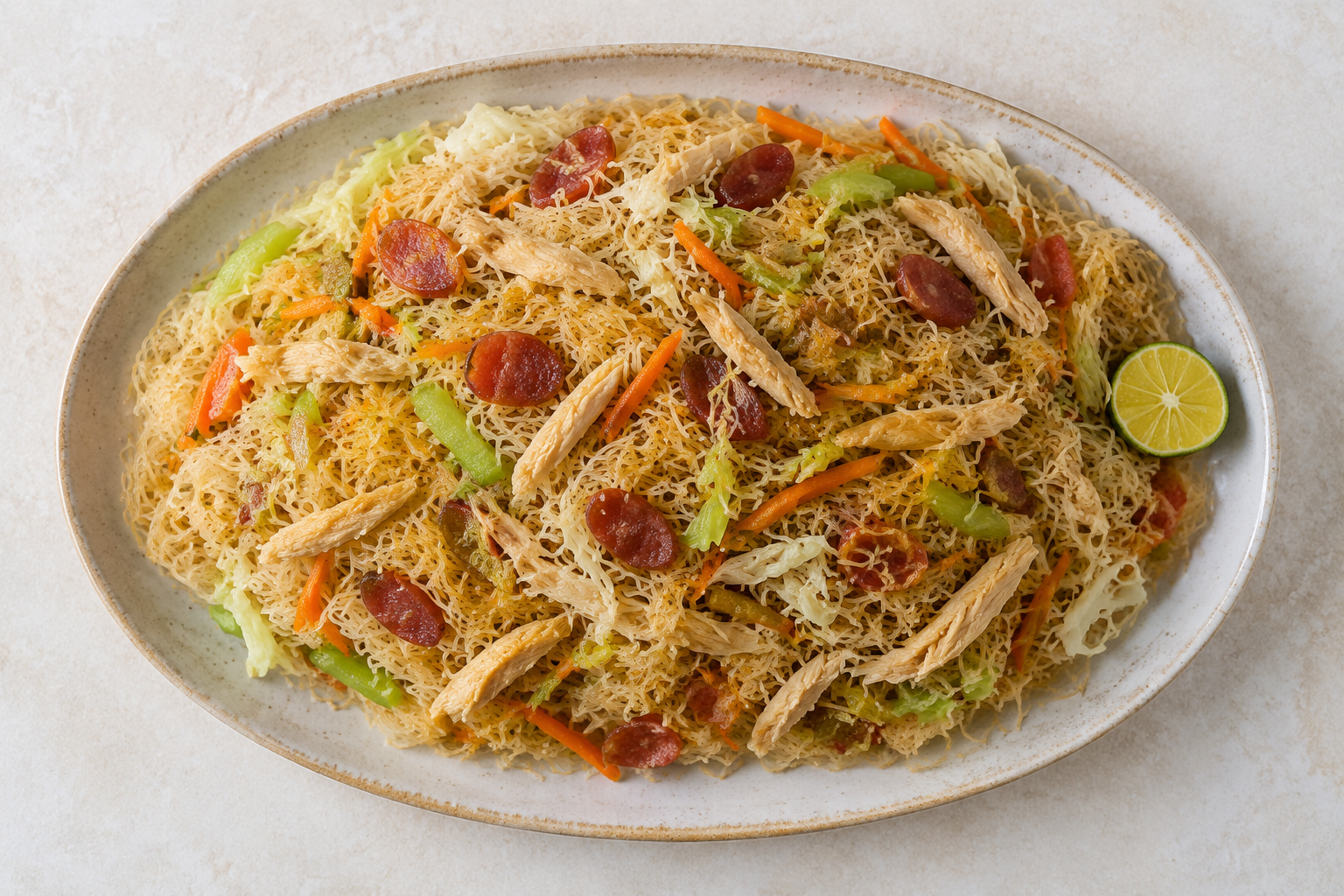
Filipino pancit bihon recipe: what you are making
Pancit bihon is a Filipino stir-fried noodle dish built around thin rice vermicelli, vegetables and a savoury seasoning. Chicken, pork, prawns, Chinese sausage or combinations of these may be added, but there is no single version cooked identically by every family. The recipe below follows the practical structure of Melissa Fox’s family pancit bihon published by SBS Food and uses ingredients Australians can recognise and source.
This version serves four to six people and combines 200 g rice vermicelli with brown onion, carrot, celery, green cabbage, shredded cooked chicken and sliced lap cheong. Soy sauce and fish sauce season the noodles, while calamansi or lemon is served at the table. It is designed for a large frying pan or wok and takes about 35 minutes when the chicken is already cooked.
The critical skill is not aggressive frying. It is controlling moisture. Prepare every ingredient before the noodles go into the pan, cook the vegetables until tender but not collapsed, soften the bihon according to its packet directions and combine everything only long enough for the noodles to absorb flavour without becoming wet or broken.
Read the beginner’s guide to Filipino food →Learn what calamansi brings to Filipino cooking →
What does pancit bihon mean?
Pancit is a broad Filipino category of noodle dishes rather than one recipe. Bihon refers here to the fine rice vermicelli used in this particular preparation. That distinction matters because pancit canton uses wheat-based egg noodles, while other regional pancit dishes use different noodles, sauces and garnishes. Substituting another noodle can make a good meal, but it changes the dish and its cooking behaviour.
SBS Food’s overview of Filipino party dishes notes the wide range of pancit across the Philippines, including regional forms associated with Iloilo, Lucban, Malabon, Cavite and Pampanga. Pancit bihon and pancit canton are among the best-known versions, yet their popularity does not make them templates for every regional noodle dish.
Pancit commonly appears at Filipino celebrations and shared meals. A Philippine Information Agency report on a Filipino-Chinese cultural festival also points to pancit canton at birthdays. Families may connect long noodles with wishes for long life, but the safest way to describe the tradition is as a common association rather than a rule observed identically by every Filipino household.
Ingredients for pancit bihon
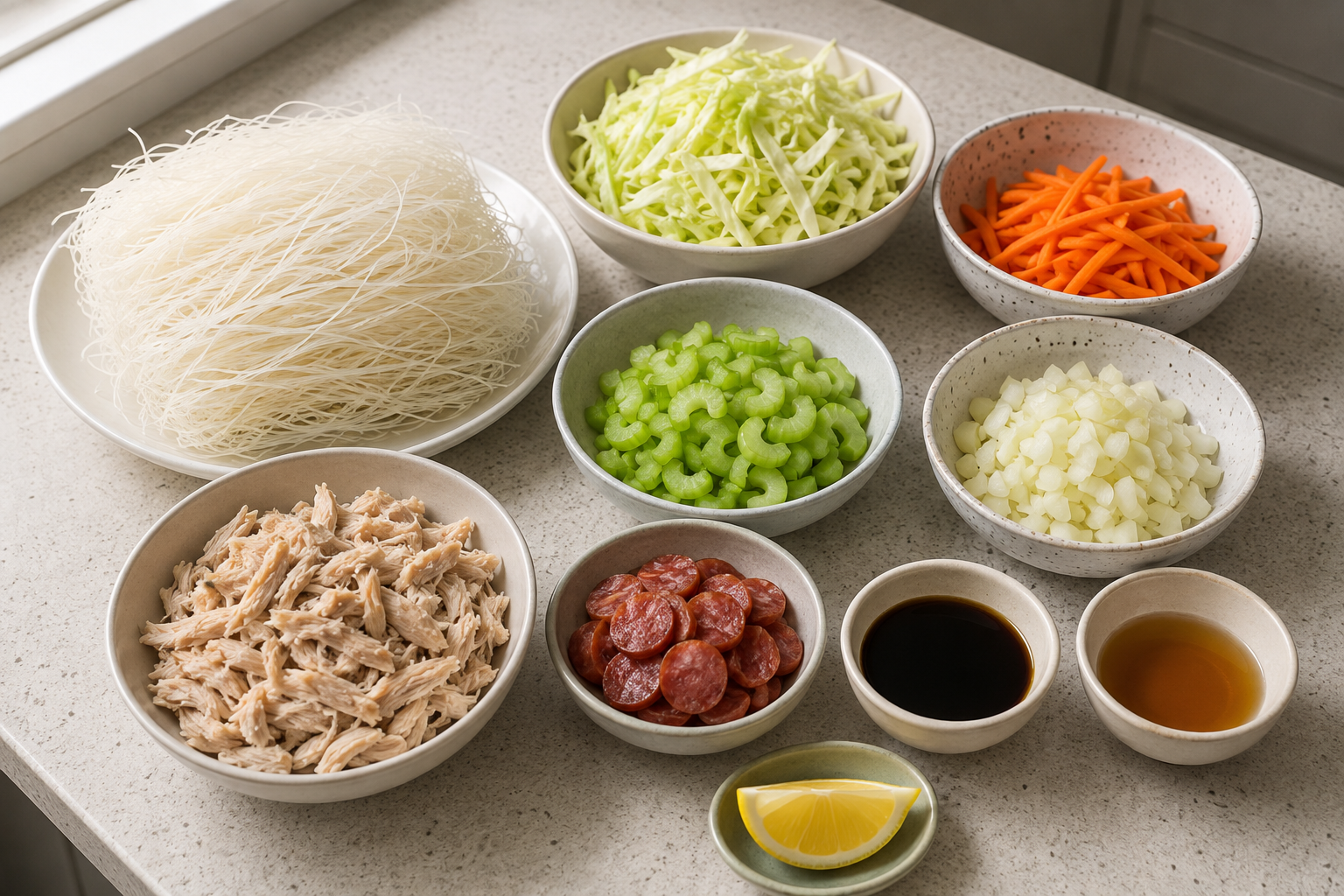
For four to six servings, prepare: 2 tablespoons vegetable or canola oil; 1 brown onion, finely chopped; 1 large carrot, diced or cut into fine matchsticks; 4 celery sticks, finely sliced; one-quarter of a green cabbage, thinly sliced; 150 g cooked chicken breast, shredded; 4 lap cheong Chinese sausages, thinly sliced; 200 g bihon or fine rice vermicelli; 1 tablespoon soy sauce; 2 tablespoons fish sauce; and calamansi or lemon wedges to serve.
This combination is adapted from Melissa Fox’s SBS Food recipe. Her published method reflects a family version passed from her grandmother to her mother and then to her. Treat it as one trusted starting point, not a claim to be the only authentic pancit bihon. Other cooks may use stock, garlic, prawns, pork, snow peas, beans, capsicum or different proportions of sauce and vegetables.
Buy rice noodles labelled bihon or thin rice vermicelli and retain the packet. Some products are soaked; others are briefly boiled. Thickness and starch vary, so a universal softening time can overcook one brand and undercook another. Lap cheong contributes sweetness and richness but can contain soy, wheat or other ingredients depending on the product. Check its label and omit it when it does not suit your guests.
Use the Filipino grocery guide for Bunbury →Plan a visit to the Hernandez store →
How to cook pancit bihon step by step
Serve immediately while the noodles are separate and the vegetables retain colour and texture. If the pan is overcrowded, combine in two batches or use a large mixing bowl for the final gentle toss. A cramped pan traps steam, which makes moisture control harder.
1. Complete the preparation first
Slice the onion, carrot, celery and cabbage before heating the pan. Shred the cooked chicken, slice the lap cheong and measure both sauces. Separate tangled dry noodles gently if the packet allows, but do not crush them. Once cooking starts, the sequence moves quickly and delayed chopping is a common cause of soft vegetables or stuck noodles.
2. Render and remove the sausage
Heat the oil in a wok or large frying pan over medium heat. Cook the sliced lap cheong for about a minute, just until fragrant and glossy, then transfer it to a clean plate. Leaving a little flavoured oil in the pan helps season the vegetables without cooking the sausage until tough.
3. Cook the vegetables in stages
Add the onion and cook until translucent. Add carrot and celery and stir for roughly five minutes, aiming for tenderness with a little resistance. Add the cabbage and cook for about three minutes more. Return the cooked chicken and sausage to the pan and heat them through. Times are guides; the cut size and pan temperature decide the actual result.
4. Prepare the bihon
While the vegetables cook, soften the noodles according to their packet directions. The SBS version briefly boils its vermicelli for three minutes and drains it, but your packet may specify soaking instead. Drain thoroughly. Excess water dilutes the seasoning and can turn the final dish heavy.
5. Season and combine
Toss the drained noodles with the soy sauce and fish sauce, then add them to the pan. Use tongs or two utensils to lift and fold rather than mash. Continue only until the noodles are evenly coloured, the vegetables are distributed and everything is hot. Taste before adding more sauce because lap cheong, soy sauce and fish sauce all contribute seasoning.
6. Finish with citrus
Transfer the pancit to a broad platter and serve with calamansi halves or lemon wedges. Citrus is added at the table so each diner can adjust the balance. Do not drown the entire platter before serving; the noodles continue absorbing liquid and some guests may prefer less acidity.
How to avoid soggy or dry pancit bihon
Soggy pancit usually begins before the noodles reach the wok. Rice vermicelli can move from flexible to over-soft quickly, especially when boiled. Follow the packet, test a strand early and drain it well. Remember that the noodles will absorb sauce and vegetable moisture in the pan, so they should not already be falling apart after softening.
Dry pancit has the opposite problem: noodles were not softened enough, the pan stayed hot too long or there was insufficient liquid for that product. Add moisture cautiously—a tablespoon or two of water or unsalted stock at a time—then lift and fold. Pouring in a large volume can wash out the seasoning and leave the vegetables swimming.
Work with texture rather than a rigid clock. Keep vegetables finely and evenly cut, use a broad pan, and stop as soon as the noodles are tender and seasoned. If preparing for guests, cook one packet as a practice run before scaling. Different bihon brands and different pan sizes can produce noticeably different results.
Ingredient substitutions that keep the recipe honest
Cooked roast chicken is a convenient replacement for home-cooked chicken breast when its seasoning suits the dish. Prawns or thinly sliced pork appear in many pancit versions, but they require their own safe cooking steps. For a meat-free version, use firm tofu and a vegetable-rich base, then replace fish sauce with a suitable vegetarian seasoning. Name the result accurately and check every sauce rather than assuming it is vegetarian.
Lemon is the practical Australian alternative when calamansi is unavailable. It supplies acidity but not the exact fragrance of calamansi. Do not claim they are identical. The Hernandez calamansi guide explains why the Filipino citrus has its own character and why importing fresh fruit into Australia is subject to biosecurity rules.
You can change the vegetables according to season and preference, provided you control their moisture and cooking time. Hard vegetables go in earlier; quick-cooking greens go later. What should remain recognisable is the rice-noodle foundation, savoury balance and shared-platter style. A substitution is useful when it is explained, not hidden behind a claim that ingredients make no difference.
Understand calamansi before substituting lemon →Browse Filipino pantry essentials →
Allergens and dietary questions
Rice vermicelli may be made from rice, but that does not prove the finished pancit is gluten-free. Ordinary soy sauce commonly contains wheat, fish sauce contains fish, and Chinese sausage may include soy, wheat or other declared allergens. Chicken or vegetable stock can also introduce ingredients that are not obvious from the dish’s appearance.
Food Standards Australia New Zealand requires specified allergens to be declared in packaged foods when present, using required names in the ingredient list and a separate ‘contains’ summary statement. Check every packet each time you cook because formulations can change. For unpackaged food, allergen information must be displayed with the food or available from the supplier.
For catering, provide allergies and dietary requirements in writing when requesting a quote. A general recipe cannot confirm the ingredients, preparation area or cross-contact controls of a particular order. Hernandez can discuss what may be possible for the current menu, but the business must confirm the exact arrangement before you rely on it.
Plan a Filipino catering menu in Bunbury →Request catering information →
Food safety and storing leftovers
This recipe starts with cooked chicken. If you cook the chicken yourself, FSANZ recommends poultry reach at least 75°C in the centre, checked with a clean food thermometer. Keep raw poultry and its utensils away from vegetables and cooked ingredients. When using purchased roast chicken, refrigerate it promptly and follow its use-by and storage directions.
Serve pancit hot, or keep it at 60°C or hotter for service. If saving leftovers, divide large quantities into clean, shallow containers so they cool quickly. FSANZ’s food-business guidance uses a two-stage cooling rule for potentially hazardous food: from 60°C to 21°C within two hours, then from 21°C to 5°C within a further four hours. A domestic cook should refrigerate promptly rather than leaving a full platter on the bench.
Reheat only the portion needed until steaming hot throughout. FSANZ advises refrigerated leftovers generally be used within three to four days, or within one day for vulnerable people. If time or temperature history is uncertain, discard the food. Smell and appearance do not reliably identify every food-safety hazard.
Serving pancit bihon for a Bunbury gathering
Pancit bihon works well on a shared table because it adds a lighter-textured noodle option beside rice, grilled foods, adobo and crisp dishes. For a mixed Australian audience, put citrus and extra seasoning on the side and identify major allergens clearly. Use serving utensils long enough to lift noodles without guests leaning across the platter.
For a larger event, scaling is not as simple as multiplying everything into one pan. Cook manageable batches so vegetables sauté rather than steam and noodles remain evenly seasoned. Plan hot holding, transport and service time before choosing quantities. A caterer can confirm current menu options and equipment more reliably than a home recipe can.
Hernandez Asian Delights is at 36 Charles Street, Bunbury. Phone 08 9768 0755 before travelling for a specific bihon brand or ingredient because stock can change. For catering, share your date, venue, guest count and dietary needs. Michael’s pork crackle can also be discussed as part of a wider Filipino spread when available and confirmed with the store.
Explore Filipino catering packages →Request a tailored catering quote →Discover Hernandez pork crackle →
Frequently asked questions
What noodles are used for pancit bihon?
Pancit bihon uses thin rice vermicelli commonly labelled bihon or rice sticks. Packet directions differ: some noodles are soaked and some are briefly boiled. Pancit canton uses a different wheat-based noodle, so it is not a direct one-for-one substitute.
Why did my pancit bihon turn soggy?
The noodles were probably softened too long, insufficiently drained or cooked in an overcrowded pan with excess liquid. Follow the packet, test early, drain thoroughly and combine only until the noodles are tender and evenly seasoned.
Can I make pancit bihon without meat?
Yes. Use tofu and additional vegetables, and replace fish sauce with a suitable vegetarian seasoning. Check soy sauce, stock and all packaged ingredients. Describe it as your meat-free variation rather than assuming every traditional or restaurant version is vegetarian.
Is pancit bihon gluten-free?
Not automatically. Rice noodles may be gluten-free, but ordinary soy sauce commonly contains wheat and processed meats or stock can add other ingredients. Check the complete labels and allergen statements for every product used.
Where can I buy bihon noodles in Bunbury?
Hernandez Asian Delights is at 36 Charles Street, Bunbury WA 6230. Brands and stock can change, so phone 08 9768 0755 before travelling if you need a particular rice-vermicelli product or pack size.
Keep exploring Filipino food and culture
Taste it in Bunbury
Bring Filipino flavour to your next gathering.
Explore catering from Hernandez Asian Delights or visit Michael and the team at 36 Charles Street, Bunbury.