· 9 min read
Why Do Filipinos Celebrate Christmas So Early?
Why do Filipinos celebrate Christmas so early? Explore the ‘ber’ months, Simbang Gabi, parol lanterns, Noche Buena and Filipino Christmas in Australia.
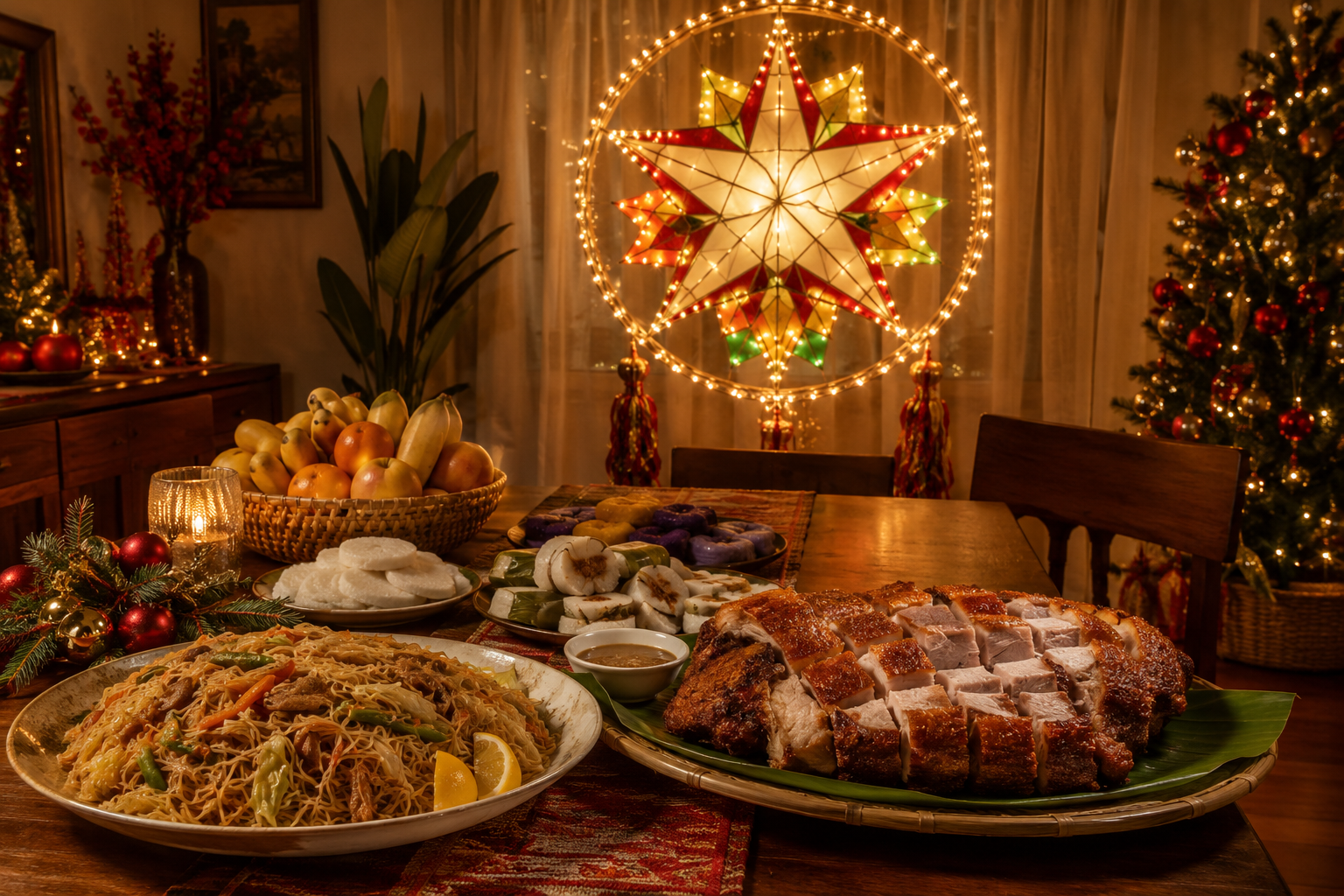
Why do Filipinos celebrate Christmas so early? The short answer
Filipino Christmas becomes visible early because September begins the sequence of months ending in ‘ber’. Across the Philippines, the start of the ‘ber months’ has become a familiar cultural signal for Christmas music, decorations, shopping, community planning and family conversations. The Philippine News Agency documents the annual excitement from 1 September, while Philippine government features describe Christmas displays appearing from that month.
That does not mean a single religious festival formally runs without interruption from September to Christmas Day. The Catholic liturgical season of Advent begins much later. The early public season is better understood as a layered cultural countdown: commercial activity, popular music and household preparation begin first, followed by specific religious observances and family gatherings in December.
Nor does every Filipino celebrate Christmas in the same way. The country includes Catholic, other Christian, Muslim, Indigenous and other religious communities, as well as people with no religious affiliation. Family, region, migration, faith, finances and personal preference all shape the season. ‘Filipino Christmas’ names a highly visible set of traditions, not a compulsory national script.
Explore 12 common questions about Philippine culture →Read the guide to Filipino fiestas →
What are the ‘ber months’?
The phrase refers simply to September, October, November and December. In popular Filipino usage, 1 September is an informal opening bell for the long Christmas countdown. Radio, television, social media and shops may shift towards seasonal music and imagery, while households begin discussing travel, gifts, reunions and food. It is a cultural convention rather than a law or church rule.
Several forces reinforce it. Christmas is a major family occasion, and preparation can involve relatives living in different provinces or overseas. Community organisations, schools, workplaces, churches and businesses all schedule their own events. Starting early spreads planning and expense across several months and gives distant family members time to coordinate. Popular media then amplifies the familiar September ritual each year.
Australians should avoid reducing the practice to ‘Filipinos put decorations up early’. The long lead-up carries anticipation, memory, religious preparation for some people and practical logistics for many. It can also bring pressure: travel, gifts and large meals cost money, and people separated from family may experience the season differently. Early celebration is joyful for many, but not universally easy.
Christian influence is important, but the Philippines is religiously diverse
The public prominence of Christmas is closely connected with the country’s large Christian population and centuries of Catholic practice. The Philippine Statistics Authority reported that 78.8 per cent of the household population identified as Roman Catholic in the 2020 census. Other Christian churches also celebrate Christmas, although worship and customs differ between denominations.
The same census recorded Islam as the second-largest reported affiliation at 6.4 per cent, with particularly strong presence in the Bangsamoro Autonomous Region in Muslim Mindanao. Indigenous spiritual traditions, Iglesia ni Cristo, Iglesia Filipina Independiente, Protestant churches and many other affiliations are also part of national life. A visible majority tradition must not erase that diversity.
If an Australian workplace or school has Filipino participants, ask what they observe instead of assuming. Some may attend Mass, some may centre the season on family food, some may belong to a church with different practices and some may not celebrate Christmas. Inclusive planning provides choice and avoids asking one Filipino person to represent an entire country.
Simbang Gabi: nine days of preparation
Simbang Gabi is among the best-known Filipino Catholic Christmas traditions. Pope Francis described it as a centuries-old Philippine novena in preparation for Christmas, with the faithful gathering over nine days for special Eucharistic celebrations. In the Philippines it is strongly associated with dawn Masses, while communities overseas may adjust times to local work, transport and parish circumstances.
The Philippine News Agency records the customary sequence beginning on 16 December and ending on 24 December. ‘Misa de Gallo’ is also used in discussion of the dawn Mass tradition, although terminology and local schedules can vary. Food vendors and community gatherings around churches may become part of the wider experience, but the core observance is religious rather than a food festival.
Migration has carried Simbang Gabi beyond the Philippines. In 2019 Pope Francis celebrated it with the Filipino community at Saint Peter’s Basilica and noted that Filipino migrants had taken the devotion to other countries. Philippine diplomatic missions also document celebrations in overseas communities. Australians attending should follow the host parish’s guidance and treat the Mass as worship, not simply a colourful cultural attraction.
The parol: a recognisable Filipino Christmas lantern
A parol is a Filipino Christmas lantern, commonly recognised by its star form. Philippine government material describes versions traditionally made with a bamboo frame, coloured paper and illumination. Contemporary parol range from simple handmade lanterns to elaborate electrical displays, and materials differ by maker, region, budget and setting.
The star shape is commonly connected with the Star of Bethlehem and the journey towards the birth of Jesus. It can appear at homes, churches, schools, streets and public events. San Fernando in Pampanga is especially associated with large lantern traditions, but a Pampanga lantern should not be treated as the only valid form or copied without acknowledging its makers and local context.
The parol also travels with Filipino communities. The Philippine Embassy in Canberra documented a community ‘Pasko sa Nayon’ display that included parol and Simbang Gabi, while the Philippine Mission in Geneva described lanterns from San Fernando used in cultural exchange. In Australia, a parol can therefore express faith, cultural identity, home and connection across distance.
Carolling, parties and gift exchanges
Carolling is another visible part of the season. Children or community groups may sing from house to house, sometimes using simple handmade percussion and receiving small gifts or money. Practice varies by neighbourhood and era, so it should not be presented as something every child does or as permission to photograph people without asking.
Schools, workplaces, neighbourhoods and family groups may hold Christmas parties well before 25 December. A common gift-exchange format is called Monito Monita, with participants assigned someone to give to over a set period or at a final reveal. Rules differ: some groups use themed gifts, price limits or weekly rounds, while others use a single exchange.
These activities help explain why the season needs room on the calendar. A family may juggle a school program, workplace party, church event, community celebration and several relatives’ gatherings. Early planning is not merely decorative enthusiasm; it manages a dense social season.
Noche Buena: the Christmas Eve meal
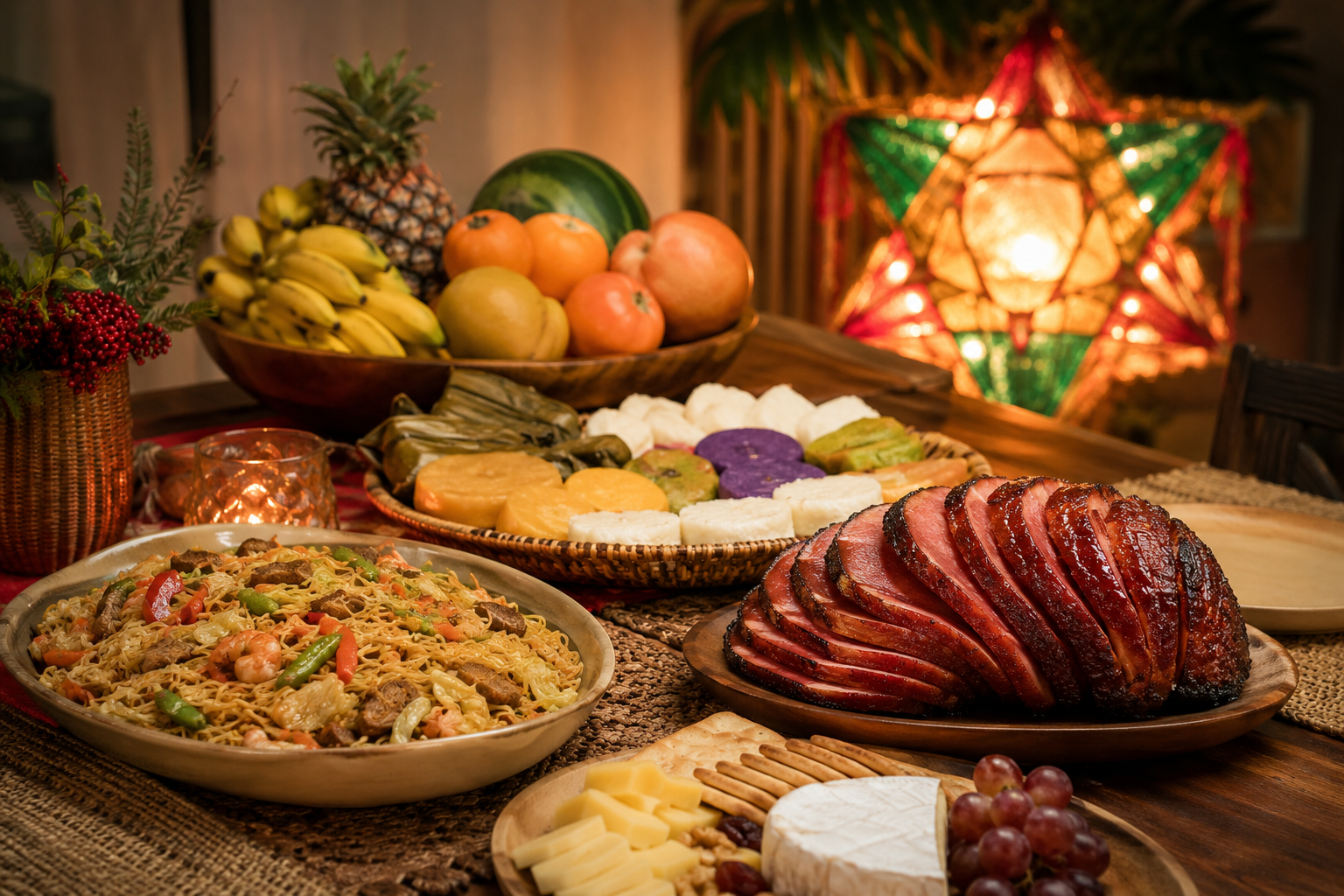
Noche Buena is the family meal associated with Christmas Eve, often shared around midnight after worship or other evening traditions. Philippine government sources describe families and close friends gathering around the table. The timing, size and menu vary widely, especially when work, travel, age, health or household budgets make a late-night feast impractical.
Frequently mentioned foods include ham, queso de bola, pancit, spaghetti, fruit salad, rice cakes, roast meats and regional or family specialities. These are examples, not a mandatory menu. A household may serve a modest favourite dish, a large buffet, food contributed by several relatives or something adapted to ingredients available overseas.
Pancit fits naturally into a shared table, while rice remains central in many families and pork dishes may appear at larger gatherings. The cultural value lies less in checking off famous foods than in preparing something meaningful and eating together. Ask which dishes a person’s family associates with Christmas; the answer may reveal region, migration history and family memory.
Cook Filipino pancit bihon at home →Understand the place of rice in Filipino culture →
Christmas Day, family visits and respect
Christmas Day may include worship, rest, another meal and visits to relatives or godparents. Philippine government accounts describe children greeting elders with mano or pagmamano, a gesture in which an elder’s hand is brought towards the forehead as a sign of respect. Children may receive pamasko—money or gifts—from relatives or godparents.
These practices differ between families. An Australian guest should observe and ask rather than imitate gestures theatrically or assume that every older person expects them. Address people as they introduce themselves and let hosts guide the rhythm of visits, meals and gift giving.
Family networks can extend across cities and countries, so video calls and staggered celebrations are now part of many households. Overseas workers and migrants may celebrate across time zones or recreate selected traditions with friends. Change does not automatically make a Christmas less Filipino; traditions remain living when communities adapt them with care.
How Filipino Christmas traditions continue in Australia
Filipino communities in Australia organise church services, cultural displays, markets, parties and family gatherings according to local circumstances. The Canberra example recorded by the Philippine Embassy brought together a parol-lit parish display, Simbang Gabi and recognisable cultural objects through community bayanihan. It demonstrates continuity through participation rather than an exact copy of life in the Philippines.
Australian seasons also change the experience. Christmas arrives in summer, travel distances are different and local food-safety requirements matter. Families may combine Filipino dishes with seafood, barbecue or other Australian customs. Mixed households can honour several backgrounds at one table without ranking one version as more authentic.
For non-Filipino guests, respectful participation is straightforward: accept invitations warmly, ask about dishes, disclose allergies early, offer practical help and avoid demanding that hosts explain every tradition. A parol, Mass or midnight meal may carry personal and religious meaning beyond its visual appeal.
Planning a Filipino Christmas gathering in Bunbury
Start with the purpose: a family Noche Buena, workplace lunch, church gathering, community event or relaxed summer party. Then confirm the date, guest count, venue facilities, service time and dietary needs. A December event calendar fills quickly, so an early discussion with the caterer is useful even when the final menu is not decided.
Build the menu around how people will eat. Shared noodles and rice support communal service; roast or crisp pork may suit some groups; vegetables, desserts and lighter options create balance. Do not advertise a dish as allergen-free without confirmation. Food Standards Australia New Zealand advises keeping high-risk foods safely chilled or hot, refrigerating festive leftovers promptly and reheating them thoroughly.
Hernandez Asian Delights is at 36 Charles Street, Bunbury. Contact the team with your event details so Michael can confirm current catering options, capacity and availability rather than relying on a general article. Specific grocery stock also changes, so phone 08 9768 0755 before travelling for a particular Christmas ingredient.
Explore Filipino catering packages →Request a tailored catering quote →Plan a Filipino catering menu in Bunbury →
What Australians can learn from the long season
The early Filipino Christmas season is best understood as an extended period of anticipation and relationship. September creates a cultural cue; December brings more specific religious and family observances; meals, lanterns, music and visits connect the stages. No single explanation—commerce, Catholicism, family or popular culture—accounts for the whole experience by itself.
Its strongest lesson is not that Christmas should begin earlier everywhere. It is that meaningful gatherings require time: time to coordinate people, remember those who are absent, prepare food, practise generosity and make traditions workable for a changing family. The long runway allows anticipation itself to become part of the celebration.
If you are invited into a Filipino Christmas in Bunbury, arrive curious rather than certain. Ask what the season means to that household, contribute as requested and enjoy the food in context. Hernandez pork crackle may also be discussed as part of a wider shared menu when confirmed with the store, but the centre of the celebration is the gathering, not one product.
Discover Hernandez pork crackle →Visit the Hernandez store →
Frequently asked questions
When does Christmas start in the Philippines?
September is the popular cultural starting point because it begins the ‘ber months’. Specific religious seasons and observances begin later: Advent follows the church calendar, while Simbang Gabi is traditionally associated with 16–24 December.
Does every Filipino celebrate Christmas?
No. The Philippines has a large Catholic and broader Christian population, but it is religiously and culturally diverse. Muslim, Indigenous and other faith communities are part of national life, and individual practice also varies. Ask people what they observe rather than assuming.
What is Simbang Gabi?
Simbang Gabi is a Filipino Catholic novena of nine special Masses preparing for Christmas, strongly associated in the Philippines with dawn gatherings from 16 to 24 December. Overseas parishes may adapt the schedule to local conditions.
What is a Filipino parol?
A parol is a Filipino Christmas lantern, commonly made in a star shape and illuminated. Designs range from simple paper-and-bamboo craft to elaborate displays. The star is commonly associated with the Star of Bethlehem.
What food is served at a Filipino Christmas?
Menus vary by family and region. Commonly mentioned foods include ham, queso de bola, pancit, spaghetti, rice cakes, roast meats and fruit-based desserts. Noche Buena can be a large feast or a modest household meal; there is no compulsory national menu.
Keep exploring Filipino food and culture
Taste it in Bunbury
Bring Filipino flavour to your next gathering.
Explore catering from Hernandez Asian Delights or visit Michael and the team at 36 Charles Street, Bunbury.