· 9 min read
What Is a Filipino Fiesta? A Cultural Guide for Australians
What is a Filipino fiesta? Learn how faith, local history, harvests, food and community shape celebrations across the Philippines and in Australia.
What is a Filipino fiesta? The short answer
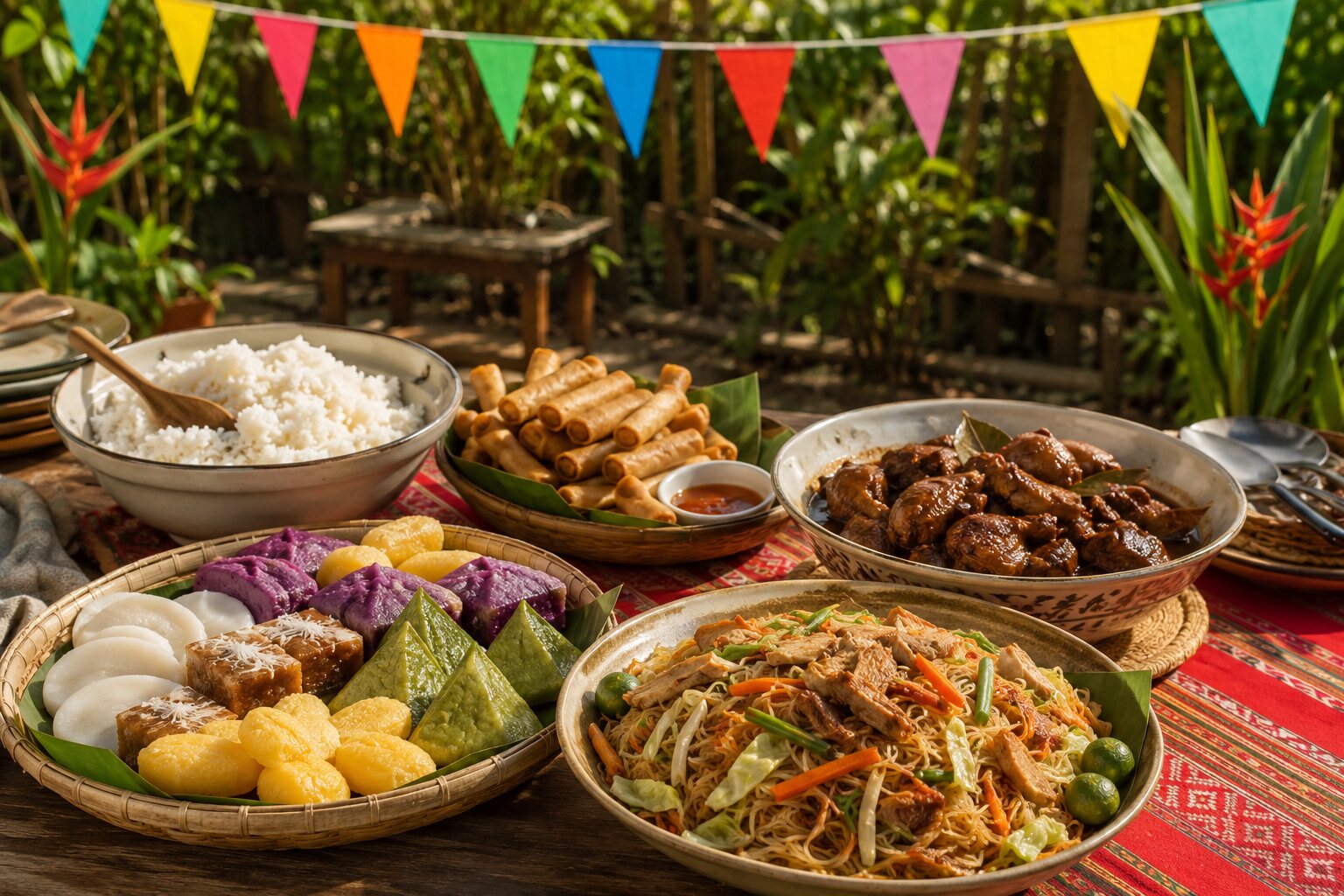
A Filipino fiesta is a community celebration connected to a particular place, patron saint, religious feast, harvest, founding anniversary, local product, cultural tradition or combination of these. Depending on the town and occasion, it may include worship, processions, street dancing, music, competitions, trade displays, games and generous shared meals. The Spanish word fiesta means a party or festivity, but celebrations in the Philippines cannot be explained by one colonial story or one national formula.
For Australians, the most important point is that ‘Filipino fiesta’ describes a broad family of celebrations rather than a single event repeated everywhere. Cebu’s Sinulog, Iloilo’s Dinagyang, Lucban’s Pahiyas and a neighbourhood gathering held by Filipinos overseas can all use the language and atmosphere of fiesta while serving different purposes. Some are strongly devotional, some foreground harvest and local industry, and others focus on civic identity or Filipino community life abroad.
Food is highly visible because eating together turns a public program into a social gathering. Yet a fiesta is more than a menu theme. It can express faith, gratitude, creativity, local pride, family hospitality and belonging. Understanding the occasion first helps a visitor appreciate why particular foods, dances, decorations or ceremonies are present instead of treating them as interchangeable Filipino entertainment.
Fiesta does not mean the same thing everywhere
The Philippines is an archipelago with many ethnolinguistic communities, religious traditions and local histories. A festival’s meaning must therefore be learned from the people and institutions responsible for it. The Department of Tourism describes Sinulog as Cebu’s feast honouring the Santo Niño, with a solemn procession as well as a colourful parade. Its account of Dinagyang likewise identifies both religious devotion to the Santo Niño and narratives associated with Panay and the Ati people.
Pahiyas in Lucban has a different emphasis. The Department of Tourism presents it as a May harvest celebration honouring San Isidro Labrador, the patron saint of farmers. Homes are decorated with agricultural produce and colourful kiping, leaf-shaped rice wafers. Anilag in Laguna draws together the arts, industries, food and local celebrations of the province’s municipalities and cities. These official descriptions show why a generic list of ‘fiesta traditions’ will always be incomplete.
Indigenous and local ritual traditions also require care. The National Museum explains Kahimunan as a gathering connected with planting-season rituals among Manobo, Higaonon and Banwaon communities of Agusan del Sur, with chanting, singing, drums, gongs and bamboo percussion. The museum also notes the way later Catholic elements appear in the public festival. That account should not be flattened into the claim that every Philippine fiesta is Catholic or that all Indigenous communities celebrate in the same way.
Celebration and feasting existed before the word fiesta
It would be inaccurate to say that communal celebration arrived in the Philippines only with the Spanish word fiesta. Archaeological material discussed by the National Museum points to ceremonial feasting in early Philippine societies. Its account of earthenware pedestalled bowls notes that these presentation vessels appeared in the archipelago from around 2000 BCE and later became widespread, often in funerary contexts. Drawing on archaeological research, the museum explains that feasting formed part of ceremonial life and could display ritual and social prestige.
That evidence does not prove that a modern town fiesta is an unchanged survival from a particular ancient feast. Culture does not move in a straight, untouched line. It does show that gathering, presenting food and sharing ceremonial meals have deep histories in the islands. Later religious, political, agricultural and civic influences created new meanings and forms around those older human practices of assembly and hospitality.
A respectful cultural guide should therefore avoid two shortcuts: describing every fiesta as purely Spanish, or describing a modern parade as a perfectly preserved precolonial ritual. Each event has its own documented development. Where organisers or museums identify an Indigenous tradition, use their specific language and acknowledge the community involved. Where a festival honours a Catholic patron, say so plainly without assuming that every participant experiences it in exactly the same way.
Why food matters at a Filipino fiesta
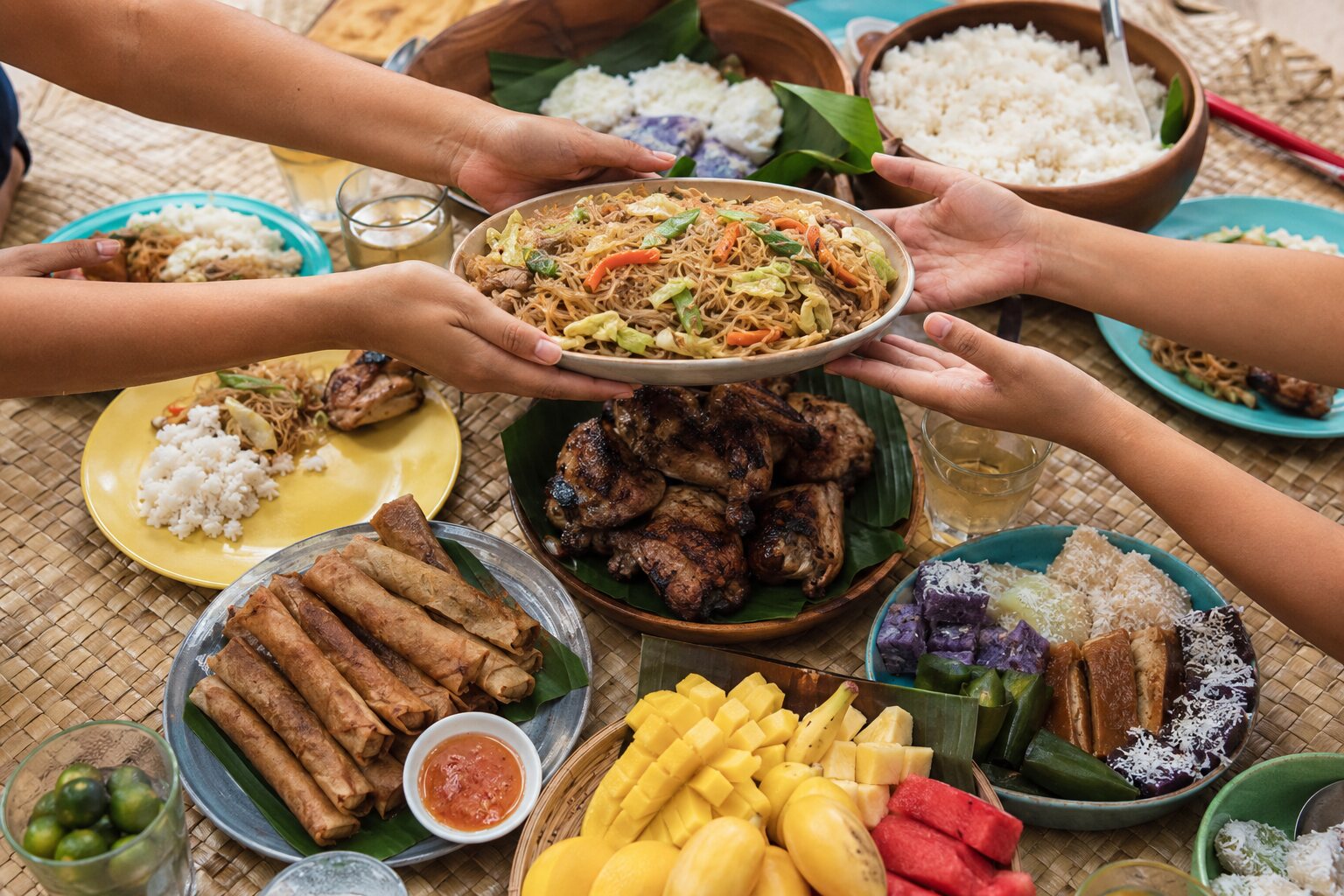
A fiesta meal makes hospitality visible. Hosts may prepare food for relatives, neighbours and visitors, while community events bring together food stalls, shared tables and local specialties. Philippine Embassy reports about diaspora celebrations repeatedly pair food with music, dance, games and reunion. At Fiesta Filipino in Norway, the official account listed lechon, barbecue, pancit and kakanin among the foods and described the day as a large family reunion that welcomed other nationalities.
At New York’s Pistahang Bayan in 2024, the Philippine Consulate reported a salu-salo featuring lechon, adobo, lumpia, menudo, turon and Filipino rice cakes. The event also included games and dance, and organisers emphasised how shared customs strengthened community bonds. These documented menus are examples from particular events, not a compulsory checklist for every fiesta. Budget, region, religion, season, family preference and access to ingredients all shape what appears on the table.
Rice and rice-based foods often have practical and cultural significance. The National Museum notes that rice is embedded in daily routines, rituals and festivities among several Philippine ethnolinguistic groups. It also documents many regional leaf-wrapped rice cakes and snacks. A visitor should resist calling an unfamiliar dish ‘strange’ before asking its name, ingredients and connection to the occasion. Food carries local knowledge, labour and memory as well as flavour.
Common elements you may see
These elements often overlap, but none defines every fiesta. The right question is not ‘What do Filipinos always do?’ It is ‘What is this community celebrating, and how do its organisers explain the program?’ That shift from stereotype to context makes a visitor more attentive and welcome.
Faith and thanksgiving
Many prominent fiestas include Masses, novenas, processions or devotion to a patron saint. Harvest celebrations may also express thanks for agricultural abundance. Religious observance and street entertainment can appear in the same program, but visitors should recognise when an activity is worship rather than a photo opportunity.
Music, dance and visual design
Drums, bands, choreography, costumes, decorated homes, arches and street displays can tell local stories. Pahiyas uses kiping and produce on house façades, while other festivals present dance competitions or regional arts. These visual forms belong to particular places; do not copy sacred or Indigenous designs as generic party props without understanding them.
Food, markets and local livelihoods
Trade fairs and food stalls can introduce visitors to local crops, crafts and businesses. Some festivals are explicitly associated with a product or industry. Buying from local makers can support the community, but a crowded celebration is not permission to photograph vendors or performers at close range without courtesy.
Games and community participation
Parlour games, sporting events, pageants, contests and shared meals can make a fiesta participatory rather than purely observational. The exact activities vary widely. Follow local instructions, allow residents and devotees space, and do not assume every event is designed primarily for tourists.
Fiesta in Filipino communities overseas
Filipino communities continue fiesta traditions far beyond the Philippines, adapting them to local seasons, venues and civic calendars. Embassy reports document barrio fiestas and Independence Day gatherings in Norway, New York, Beijing, Bangkok and other cities. Programs commonly combine Filipino food, cultural performances, games, community organisations and invitations to non-Filipino friends. The events create a place to share heritage while living in another country.
The Beijing embassy described its 2023 celebration as supporting pakikisama, a sense of belonging, and bayanihan, unity or cooperative community spirit. Those words have richer meanings than a single English translation, and they should not be used as decorative slogans detached from relationships. In practice, the report connects them with people gathering across different backgrounds, sharing food and renewing pride in heritage.
In Australia, a Filipino-themed community day, family celebration or catered event may carry the warmth of fiesta without claiming to reproduce a specific Philippine festival. That distinction is useful. You can celebrate Filipino food and hospitality in Bunbury while being honest that you are not staging Sinulog, Pahiyas or an Indigenous ritual. Invite Filipino participants into planning, identify dishes accurately and explain what has inspired the gathering.
How Australians can attend respectfully
Start by reading the official program and confirming the date, venue, transport and any worship component. Festival schedules can change, so use the organiser or local tourism office rather than an old travel blog. Wear practical clothing for heat, rain, walking and crowds. Ask before entering private spaces, photographing people closely or touching religious images and displays. Public celebration does not erase personal boundaries.
When food is offered, follow the host’s lead. Take a modest first portion if many people are waiting, learn the dish name and ask about ingredients before eating if you have allergies or dietary requirements. Do not assume a dish is vegetarian because meat is not obvious, or gluten-free because it is rice-based. Soy sauce, stocks, condiments and cross-contact can matter. A host or caterer can only respond accurately when requirements are explained clearly.
Use curiosity without making one person responsible for explaining an entire nation. ‘What does this celebration mean to your family?’ is better than ‘Do all Filipinos do this?’ Pronounce names as carefully as you can, accept correction and avoid ranking the celebration against another culture’s festival. Respectful participation means enjoying the welcome while recognising that the event belongs first to the community sustaining it.
Creating a fiesta-inspired gathering in Bunbury
For a private event, begin with purpose and guests rather than decorations. Decide whether you are celebrating a Filipino family occasion, introducing friends to Filipino food or simply choosing a generous shared menu. Then confirm guest numbers, dietary needs, venue facilities and service time. A focused menu can communicate more than an overloaded buffet of dishes chosen only because they look colourful online.
Build the table around a balanced combination: rice or noodles, one or two mains, vegetables or a fresh element, and a crisp or sweet finish. Chicken adobo offers an approachable savoury-sour main, while pancit or lumpia may suit a shared meal when confirmed by the caterer. Hernandez pork crackle can add a distinctive local product, but stock, flavours, quantities and the dipping sauce must be discussed directly rather than inferred from a blog article.
If you want the atmosphere of fiesta, use welcoming colour, music selected with care and short explanations of the food. Avoid copying sacred costumes, ceremonial objects or the name of a specific festival as generic décor. Hernandez Asian Delights can help plan Filipino catering in Bunbury around the available packages and confirmed menu. The strongest call to action is simple: gather people, share food generously and give the culture behind the meal the attention it deserves.
Explore Filipino catering packages →Request a tailored catering quote →Visit the Hernandez store in Bunbury →Discover Hernandez pork crackle →
Frequently asked questions
Is every Filipino fiesta a religious celebration?
No. Many fiestas honour a Catholic patron or include worship, while others emphasise harvest, a founding anniversary, local products, arts, civic identity or Indigenous cultural traditions. Some combine several elements. Check the official account of the particular celebration rather than assuming one model.
What food is usually served at a Filipino fiesta?
There is no compulsory national menu. Official accounts of particular events mention foods such as lechon, adobo, pancit, lumpia, kakanin and other rice cakes, but menus vary by region, family, budget, season and occasion. Ask the host or caterer what is actually being served.
What is the difference between a fiesta and a kamayan feast?
A fiesta is a wider community or family celebration that can include religion, performances, games, food and public events. Kamayan refers to eating with the hands and may describe a communal meal arranged on banana leaves. A kamayan meal can happen during a celebration, but the terms are not interchangeable.
Can non-Filipinos attend a Filipino fiesta?
Many public fiestas and diaspora community events welcome visitors, but access and etiquette depend on the program. Follow organiser guidance, respect worship and private spaces, ask before close photography and approach the event as a guest rather than treating it as a costume theme.
Can I organise a Filipino fiesta-style catered event in Bunbury?
You can plan a Filipino-inspired shared celebration without claiming to reproduce a specific regional or religious festival. Contact Hernandez Asian Delights with the date, guest count, venue and dietary needs so Michael can confirm available catering options and help shape an appropriate menu.
Keep exploring Filipino food and culture
Taste it in Bunbury
Bring Filipino flavour to your next gathering.
Explore catering from Hernandez Asian Delights or visit Michael and the team at 36 Charles Street, Bunbury.