· 9 min read
What Is Halo-Halo? An Australian Guide to the Filipino Shaved-Ice Dessert
What is halo-halo? Discover the Filipino shaved-ice dessert, its ingredients, textures, variations and how to order or assemble it in Australia.
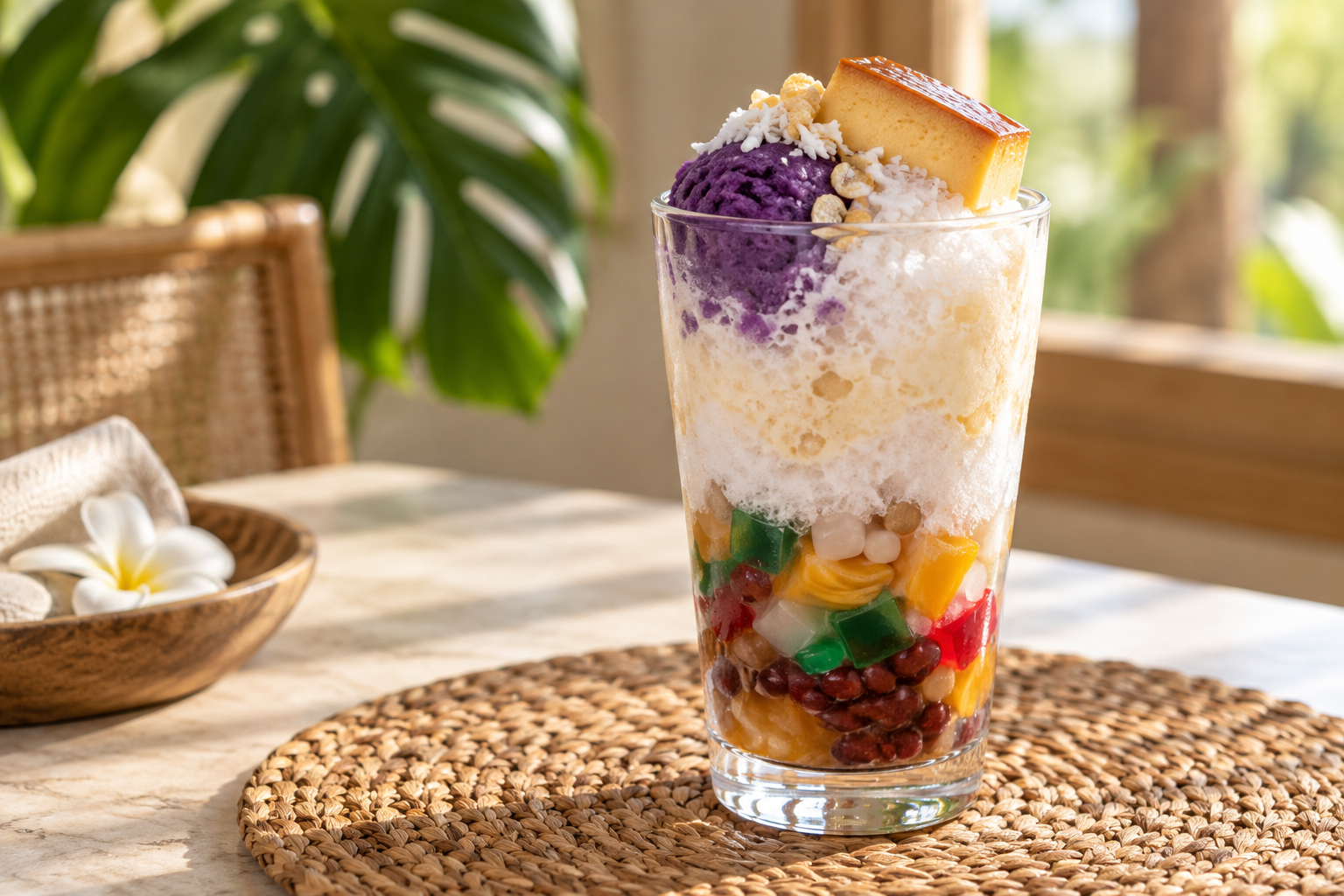
What is halo-halo?
Halo-halo is a Filipino cold dessert made by layering finely crushed or shaved ice with milk and a varied collection of sweet ingredients. A glass may contain sweetened beans, coconut, fruit, jellies, sago, purple yam and other preserves, then be finished with toppings such as ube halaya, leche flan or ice cream. The diner mixes the layers together before eating, creating changing flavours and textures as the ice melts.
A fixed ingredient list is less useful because halo-halo is deliberately flexible. A lavish restaurant version might arrive crowded with colour and toppings, while a family or regional version may focus on only a few ingredients. Neither abundance nor minimalism automatically makes one more authentic.
For Australians trying it for the first time, expect something between a sundae, a shaved-ice dessert and a chilled fruit-and-bean medley—but with its own Filipino character. It is eaten with a long spoon and, once partly melted, sometimes sipped from the glass.
What does halo-halo mean?
The name comes from the Filipino word halo, meaning to mix. Repeating the word conveys the idea of being thoroughly mixed or mixed together. That action is not a decorative afterthought: stirring combines the milk and melting ice with sweet ingredients that begin at different levels of the glass.
A tall halo-halo can look too full to stir at first. Press the toppings gently into the ice, work the spoon down the side and lift some of the lower ingredients upwards. Mix in stages instead of forcing everything over the rim. The goal is not a perfectly smooth drink; part of the appeal is finding creamy, chewy, soft, crisp and icy elements in successive spoonfuls.
What ingredients are usually in halo-halo?
The foundation is ice and milk. Evaporated milk is common because it gives richness without behaving exactly like fresh drinking milk, although recipes and businesses may use condensed milk, coconut milk or another dairy or plant-based combination. Sweetened components sit below or through the ice, and richer toppings are often placed on top.
Frequently encountered additions include minatamis na saging, or bananas cooked in syrup; sweetened jackfruit; macapuno coconut strings; kaong, the fruit of the sugar palm; nata de coco; gulaman jelly; sago pearls; sweetened red, white or mung beans; sweet potato; pinipig, which is young rice that has been pounded and toasted; and pieces of colourful jelly. Ube halaya, ube ice cream and leche flan are popular finishes rather than compulsory components.
A menu photograph is only a guide. Ask what is in the serving if an ingredient matters to you. Two glasses sold under the same broad name can differ in fruit, beans, jelly, dairy, ice cream, portion size and sweetness.
Learn what ube really is →See the Filipino leche flan guide →
Why beans, coconut and jelly belong in a dessert
Sweet beans can surprise diners who associate beans only with savoury meals. In halo-halo they are cooked or preserved with sugar and used in modest portions, contributing a soft, creamy texture. They sit alongside fruit and coconut rather than tasting like an unsweetened tin of beans tipped into ice.
Macapuno is not ordinary dry desiccated coconut. It is valued for tender, jelly-like coconut flesh and is commonly sold sweetened in jars. Nata de coco is different again: translucent, chewy cubes produced by bacterial fermentation of coconut water. Gulaman generally refers to agar-based jelly, which has a firmer bite than many gelatine desserts. These ingredients help explain why halo-halo is as much about texture as sweetness.
Pinipig provides contrast when used as a topping, while leche flan adds dense custard and caramel. Ube contributes an earthy, sweet purple-yam flavour in the form of jam or ice cream. A balanced glass does not need every possible inclusion; it needs enough variation that the spoon keeps discovering something new.
There is no single universal halo-halo formula
Australian-Filipino cookbook author Yasmin Newman describes halo-halo as a shaved-ice dessert with creamy milk and an imaginative range of mix-ins. Her writing also reflects an important truth: Filipino cooking changes across islands, families and diaspora kitchens. Halo-halo is a strong example of that adaptability.
Some versions emphasise many preserved fruits, beans and jellies. Others are famously restrained, allowing very fine ice, milk, sweetened banana, macapuno and flan to carry the dessert. Seasonal fruit or locally available products may appear, and a contemporary chef may make jellies or preserves in-house. A supermarket jar can be practical for a home version without representing every regional tradition.
Avoid judging a glass by how closely it matches one viral photograph. Colour is not a quality standard, and more toppings can become muddled if each is excessively sweet. Fine ice, sensible proportions and complementary textures matter more than reaching an arbitrary ingredient count.
How does halo-halo taste and feel?
The first spoonful may be mostly cold milk, ice and the rich topping. Deeper spoonfuls bring syrup, fruit, coconut, beans and jelly into the mixture. As the ice melts, the dessert becomes creamier and easier to stir, while the flavours move from separate layers towards one chilled, milky blend.
Good halo-halo balances sweetness against dilution from the ice. The preserves and toppings can taste intense by themselves because they are meant to season the unsweetened or lightly sweetened ice and milk. If the ice is coarse, stirring can feel difficult and the glass may taste watery before its ingredients combine. Finely shaved ice integrates more readily.
Texture is deliberately varied. Expect softness from beans and fruit, chew from coconut and jelly, smoothness from flan or ube, and an occasional crisp note from pinipig. Someone who dislikes mixed textures may prefer a simpler version with fewer inclusions; that is a useful request, not a failure to understand the dessert.
Is halo-halo the same as an ice cream sundae?
No. Ice cream may crown halo-halo, but it is not necessarily the base and is sometimes omitted. The structure depends on shaved ice, milk and mixed ingredients distributed through the glass. A sundae usually centres ice cream with sauces and toppings kept largely on top.
Halo-halo also differs from simpler Filipino iced desserts such as mais con yelo, which highlights sweet corn with ice and milk, and saba con yelo, which centres sweetened saba banana. Those desserts share an icy format but have a narrower ingredient focus. Binignit or ginataang halo-halo should not be confused with the cold dessert either; it is a cooked coconut-milk preparation with root crops, banana and other ingredients and may be served warm or cool depending on custom.
Across Asia there are other shaved-ice traditions, but resemblance does not make the names interchangeable. Bingsu, kakigori and ais kacang each have their own histories, ingredients and serving conventions.
How to order halo-halo for the first time
Read the description or ask what the shop includes, especially if you are unsure about beans, coconut, flan or ice cream. A regular serving can be substantial, so sharing may suit people who want a taste after a full meal. Order it when you are ready to eat; shaved ice does not wait patiently through a long conversation or trip home.
When it arrives, taste a little topping if you wish, then begin mixing before the lower ingredients remain stranded at the bottom. Use the long spoon to loosen the edge and fold rather than stab. If the glass is packed to the rim, eating one or two spoonfuls first creates room to combine the rest without spilling.
Do not assume the purple topping is always plain ube or that every coloured cube has the same composition. If you have allergies, dietary restrictions or strong dislikes, ask the business rather than identifying ingredients only by appearance.
Allergens and dietary questions in Australia
Halo-halo commonly contains milk through evaporated milk, condensed milk or ice cream. Leche flan normally contains egg and milk. Toppings can include nuts or pinipig, while packaged jellies, preserves, ice cream and flavourings may introduce other allergens or cross-contact risks. Coconut is also present in many versions, including macapuno and nata de coco.
Food Standards Australia New Zealand requires prescribed allergens to be declared on packaged food labels using required names, but a mixed dessert assembled from several products still deserves a direct conversation with the food business. Ask about the complete serving, not just the milk. A clean spoon or dairy-free milk does not make a dessert safe if the toppings, equipment or preparation area create cross-contact.
Vegan, dairy-free and gluten-free halo-halo can be possible, but the name alone proves none of those claims. Coconut milk can replace dairy in some recipes, yet flan and ice cream may still contain milk or egg. People with coeliac disease or a serious allergy should request ingredient and cross-contact information specific to the business and decide according to their own medical guidance.
A practical way to assemble halo-halo at home
Home halo-halo is easier when you choose four to six complementary components rather than opening every sweet jar in the pantry. Start with one fruit, one bean or root crop, one coconut element and one jelly or pearl. Add finely shaved ice, pour over enough chilled milk to moisten it, then finish with one or two richer toppings such as ube halaya or a small piece of flan.
Drain very syrupy jarred ingredients so they flavour rather than flood the glass. Chill all components before assembly and prepare the ice last. Use potable water for the ice, clean equipment carefully and return opened dairy products and preserves to refrigeration promptly. Follow each package’s storage directions and use-by information rather than assuming a high sugar content makes a product indefinitely safe.
Serve immediately in a sturdy glass or bowl with a long spoon. For a group, set out labelled components over ice or in the refrigerator and assemble to order; do not leave milk, flan or cut fruit sitting through a warm afternoon.
Where halo-halo fits in Filipino food culture
Halo-halo suits hot weather, an afternoon merienda and the sweet end of a shared meal. Its bright appearance makes it popular at celebrations, yet it can also be an everyday refreshment made from practical pantry preserves. Like merienda itself, the occasion is flexible rather than governed by one ceremonial rule.
The dessert also rewards conversation. Diners compare favourite toppings, preferred ice texture and whether a crowded or minimalist glass is better. Those preferences often reflect family experience and place, so it is more respectful to ask about someone’s version than to announce one official formula.
For a Bunbury gathering, halo-halo needs a realistic service plan because it must be assembled close to eating. Discuss dessert, current menu availability, serving equipment, guest numbers and dietary requirements directly with the caterer. Do not assume Hernandez Asian Delights offers every item mentioned in this guide on every date.
The simple answer to what halo-halo is
Halo-halo is a Filipino shaved-ice dessert that becomes complete when its layers are mixed. Ice and milk carry a changing combination of sweet fruit, beans, coconut, jellies, roots and toppings, but no single list defines every valid version. Its identity lies in mixture, contrast and refreshment rather than in one compulsory garnish.
Try it with an open mind and a long spoon. Ask what is in the actual glass, stir patiently and notice how the taste changes as the ice melts. Then decide whether your ideal halo-halo is abundant, minimalist, crowned with ube and flan, or built around only a few favourite textures.
Order Hernandez pork crackle →Explore more Filipino food and culture guides →
Frequently asked questions
What is halo-halo made of?
Halo-halo is built from shaved or crushed ice, milk and mixed sweet ingredients. Common additions include beans, banana, jackfruit, macapuno, nata de coco, gulaman, sago and sweet potato, with ube, leche flan or ice cream on top. The exact combination varies.
What does halo-halo mean in English?
Halo means to mix in Filipino, and halo-halo conveys mixed together or thoroughly mixed. The name describes how diners stir the milk, ice, preserves and toppings before eating.
Do you mix halo-halo before eating it?
Yes. Gently press the toppings into the ice, work a long spoon down the side and lift the lower ingredients upwards. If the glass is very full, eat a spoonful or two first to create room and avoid spills.
Is halo-halo always made with ube ice cream?
No. Ube halaya or ube ice cream is a popular topping, but many halo-halo versions use one, both or neither. The dessert is defined more broadly by shaved ice, milk and mixed sweet components.
Is halo-halo dairy-free or gluten-free?
Not automatically. Milk, ice cream and leche flan commonly contain dairy, while flan also contains egg. Packaged jellies, toppings and shared equipment create further ingredient and cross-contact questions. Ask about the specific serving rather than relying on the dessert’s name.
Keep exploring Filipino food and culture
Taste it in Bunbury
Bring Filipino flavour to your next gathering.
Explore catering from Hernandez Asian Delights or visit Michael and the team at 36 Charles Street, Bunbury.