· 9 min read
Filipino Turon Recipe: Crispy Banana Spring Rolls for Australian Kitchens
Make Filipino turon with caramelised banana, jackfruit and crisp spring-roll wrappers, plus Australian ingredient and frying guidance.
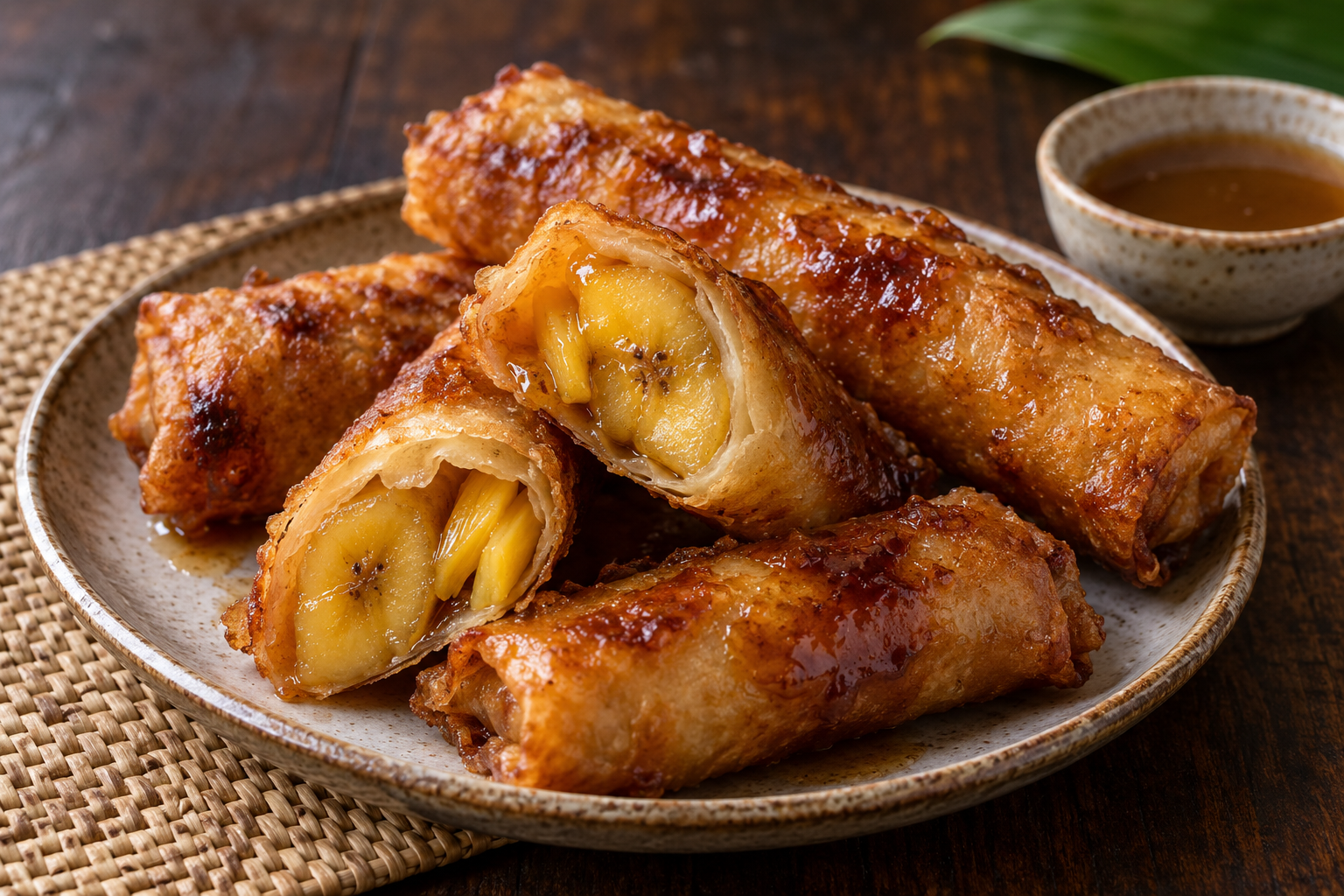
Filipino turon recipe: the short answer
Turon is a Filipino sweet snack made by wrapping banana—and often a little jackfruit—in a thin lumpia or spring-roll wrapper, then frying it until crisp and caramelised. The National Museum of the Philippines describes turon as fried plantain in an edible lumpia wrapper covered with caramelised sugar. It is crunchy outside, soft and fruity inside, and best served while still warm.
This Australian kitchen guide follows the tested proportions and 170°C frying method in Angela Nahas’s SBS Food recipe. It makes 16 rolls in about 50 minutes. SBS uses lady finger bananas, which are readily understood by Australian shoppers, while Philippine government sources identify saba as the traditional banana closely associated with turon. The result is a dependable home version that keeps the dish’s essential banana, wrapper and caramel structure clear.
Discover Filipino merienda →Start with our beginner’s guide to Filipino food →
What is turon?
Turon is sometimes called lumpiang saging, or banana lumpia. Unlike savoury lumpiang Shanghai, its centre is fruit and sugar rather than pork and vegetables. The wrapper becomes brittle and golden in hot oil while the banana softens and the sugar melts around it. Thin pieces of ripe jackfruit, known as langka, add a distinctive floral fruit note, but recipes and family preferences vary.
Its place as a familiar Filipino snack is well documented. The Philippine Department of Science and Technology’s PCAARRD identifies saba banana as a staple ingredient in snacks including turon, maruya, minatamis na saging and halo-halo. A 2026 Philippine Embassy culinary workshop also described turon as a popular Filipino fried banana roll and demonstrated how cooks may adapt the banana variety when saba is unavailable.
That adaptability is useful in Australia. You do not need to pretend that every supermarket banana is saba. Name the substitution honestly, choose fruit with the right firmness and use a recipe tested for the banana you can buy. This guide uses SBS’s lady finger version; if a Filipino grocer has saba or cardaba bananas, ask how ripe they should be and expect their size to change the yield.
Compare savoury lumpiang Shanghai →Read the guide to Filipino grocery shopping in Bunbury →
Ingredients for 16 turon
Use 16 spring-roll wrappers; 275 g firmly packed brown sugar; 75 g caster sugar; eight lady finger bananas, peeled and halved lengthways; 95 g fresh or canned seeded jackfruit flesh, sliced; and enough neutral vegetable oil for deep-frying. These quantities come from the SBS Food recipe and produce 16 individual rolls.
Keep the wrappers covered with a barely damp clean tea towel because exposed sheets dry quickly and crack. Drain canned jackfruit thoroughly and check that it is ripe fruit in syrup, not young green jackfruit in brine. Slice it into slender strips so each roll closes cleanly.
Choosing bananas and Australian substitutions
Traditional saba is a cooking banana with a firmer, starchier structure than a very ripe dessert banana. DOST-PCAARRD’s current work with farmers in Laguna describes saba as deeply embedded in Filipino food culture and in demand for both household cooking and food processing. It is the reference point for traditional turon, not merely a decorative detail.
SBS specifically tests lady finger bananas, so they are the safest widely available Australian choice for this version. Select fruit that is ripe and sweet but still firm enough to halve cleanly. Avoid badly bruised, collapsing bananas: their extra moisture and softness make rolling untidy and can create a mushy centre before the wrapper has crisped.
If you substitute another banana or plantain, match the pieces to the wrapper rather than forcing in an oversized half. Cut a firm banana into narrower batons of similar length and thickness. The Philippine Embassy’s 2026 cooking workshop substituted locally available Kerala bananas for saba, providing a useful official example of transparent, practical adaptation. Because sweetness and density vary, treat a new variety as a test batch rather than assuming identical timing.
How to wrap turon tightly
Set up a dry board, the wrappers, measured sugars, banana halves, sliced jackfruit, a small bowl of water and a lined tray. Position one wrapper as a diamond, with a point facing you. Across the lower half, make a narrow horizontal line using three teaspoons brown sugar and one teaspoon caster sugar. Lay one banana half over the sugar and add a small amount of jackfruit.
Lift the bottom corner over the filling and pull it back gently so the wrapper sits closely around the fruit. Fold the left and right corners inward, keeping the sides straight and the filling enclosed. Roll towards the top point. Brush the two upper edges sparingly with water, then finish the roll with the seam underneath. It should be snug, not crushed.
Repeat with the remaining wrappers. Keep finished rolls in one layer so they do not stick together. If a wrapper tears, transfer the filling to a fresh sheet rather than patching a large split: escaped sugar can burn in the oil. Small air pockets are less serious than an open seam, but a close roll gives the cleanest shape and most even crust.
How to fry turon safely and evenly
Fill a deep-fryer or large heavy saucepan no more than one-third full with neutral oil, as directed by SBS, and heat it to 170°C over medium heat. A thermometer is the clearest way to monitor the temperature. Fry the turon in four batches, turning each roll halfway, for about four minutes or until the wrapper is crisp and evenly golden.
Crowding cools the oil and makes rolls touch, while oil that is too hot can darken the sugar before the wrapper crisps. Let the temperature return towards 170°C between batches. Lift cooked turon out with a slotted spoon and drain on paper towel. While the surface is still hot, carefully roll or sprinkle it with the reserved 55 g brown sugar for the SBS finish.
Deep-frying needs undivided attention. Western Australia’s Department of Fire and Emergency Services says never to leave cooking unattended, not even for a minute, and never to use water on a fat or oil fire. Keep handles turned in, loose fabric away from the stove and children clear of the cooking zone. If oil ignites, turn off the heat only if safe, do not move the pan and follow DFES emergency guidance.
Troubleshooting common turon problems
If the wrappers split, the filling may be too wet, bulky or loosely rolled. Drain jackfruit well, keep sugar in a narrow line and seal the final point with only enough water to make it adhere. Check the wrapper packet for defrosting directions; forcing apart sheets that are still partly frozen can tear them.
If the turon is pale and oily, the oil may have cooled after too many rolls were added. Use four small batches and allow the temperature to recover. If it browns before four minutes, the oil may be hotter than 170°C or loose sugar may be scorching. Remove burnt sugar fragments between batches with a heatproof strainer and adjust the heat gradually.
If caramel sticks aggressively to the draining surface, move the rolls before the coating sets solid and avoid stacking them. If the centre is watery, the bananas may have been overripe or the jackfruit insufficiently drained. A crisp wrapper will soften with time because steam migrates from the fruit, which is why freshly fried turon has the best contrast.
Variations without losing the recipe’s identity
Banana, a thin wrapper and caramelised sugar are the centre of this recipe. Jackfruit is a familiar addition rather than an absolute requirement. SBS suggests mango when jackfruit is difficult to find and also mentions shaved chocolate as an optional variation. Treat either as a variation, not as a claim that every household makes turon that way.
Baking or air-frying may appeal to people avoiding a saucepan of oil, but it will not reproduce the same deep-fried caramel surface automatically. Wrapper brands and appliances behave differently. Follow a recipe developed specifically for that method instead of transferring the 170°C oil directions and expecting an identical result.
Allergens, storage and making turon ahead
Spring-roll wrapper recipes differ, so read the full ingredient list and allergen summary on the packet. Wheat must be declared when present under Australia’s plain-English allergen labelling rules; other declared allergens depend on the particular product. Check canned jackfruit and any optional chocolate or other filling as well. For an allergy, do not rely on appearance or on a different brand you used previously.
SBS says the assembled, uncooked rolls can be prepared up to one day ahead, covered with a tea towel and refrigerated overnight. Keep them chilled and fry directly from the prepared state while monitoring the oil temperature. Do not leave fruit-filled wrappers sitting at room temperature for extended periods.
Cooked turon is at its crispest soon after frying. If there are leftovers, refrigerate them promptly in a covered container once they have stopped steaming. FSANZ advises keeping perishable food at 5°C or colder, refrigerating it within two hours if it will be used later, and reheating cold food quickly until piping hot. Reheating in an oven or air fryer generally protects texture better than a microwave, but follow the appliance instructions and watch the caramel closely.
How to serve turon
Allow the rolls to stand briefly after frying because molten sugar and fruit can be much hotter than the wrapper looks. Serve them warm as merienda, a party sweet or a simple dessert. They need no sauce, although a modest scoop of ice cream can create a hot-and-cold dessert if that suits the occasion.
Turon also makes sense beside other Filipino celebration foods because it is portioned and easy to share. It can follow pancit, barbecue, lumpia or a savoury catering spread without requiring a formal plated dessert. If you are planning a Bunbury gathering, check with your caterer about current menus rather than assuming a particular dish is always available.
Explore Hernandez catering →Plan a Filipino catering menu in Bunbury →
A crisp Filipino snack worth learning properly
Turon looks simple, but its appeal comes from controlling a few details: firm fruit, a snug wrapper, measured sugar, clean seams and steady oil temperature. Start with the tested SBS quantities before experimenting. Once you recognise how the wrapper colours and how the banana softens, you can make informed adjustments for the fruit and products available in your Australian kitchen.
The dish also carries a useful cultural lesson. Filipino food is not fixed to one supermarket supply chain. Saba remains the traditional reference, while cooks overseas make transparent substitutions and retain the technique’s core. Respectful adaptation means naming what changed, not presenting every banana roll as the only authentic version.
Hernandez Asian Delights shares these guides to help Bunbury and South West readers understand the food behind the flavour. Browse the store for current Filipino grocery offerings, order pork crackle for your next gathering, or speak with the team about catering. Product and menu availability can change, so confirm directly before planning around a specific item.
Frequently asked questions
What is turon made from?
Turon is made from banana wrapped in a thin lumpia or spring-roll wrapper and fried with sugar until crisp and caramelised. Jackfruit is a familiar addition. This SBS-based version uses lady finger bananas, brown and caster sugar, sliced jackfruit and vegetable oil.
Which banana is best for turon in Australia?
Saba is the traditional Filipino reference, but it is not always easy to find in Australia. SBS tests lady finger bananas in its Australian recipe. Choose ripe but firm fruit that can be halved without collapsing, and cut other banana varieties into pieces that fit the wrapper.
Can I make turon without jackfruit?
Yes. Banana-only turon keeps the dish’s essential structure. SBS also suggests mango if jackfruit is hard to find. Any substitution should be firm, used sparingly and drained where necessary so the wrapper can seal and crisp.
Why does my turon split while frying?
Common causes include wet or oversized filling, dry wrappers, trapped air and a seam that was not sealed. Drain jackfruit, avoid overfilling, keep unused wrappers covered, roll snugly and seal the final point with a small amount of water.
Can turon be prepared ahead?
SBS says the assembled rolls can be covered and refrigerated overnight before frying. Cooked turon is best fresh because steam softens the wrapper. Refrigerate leftovers promptly and reheat them until piping hot, following FSANZ food-safety guidance.
Keep exploring Filipino food and culture
Taste it in Bunbury
Bring Filipino flavour to your next gathering.
Explore catering from Hernandez Asian Delights or visit Michael and the team at 36 Charles Street, Bunbury.