· 9 min read
Filipino Kare-Kare Recipe: Peanut Stew for Australian Kitchens
Make a Filipino kare-kare recipe with tender oxtail, vegetables and a rich peanut sauce, using Australian measurements and practical substitutions.
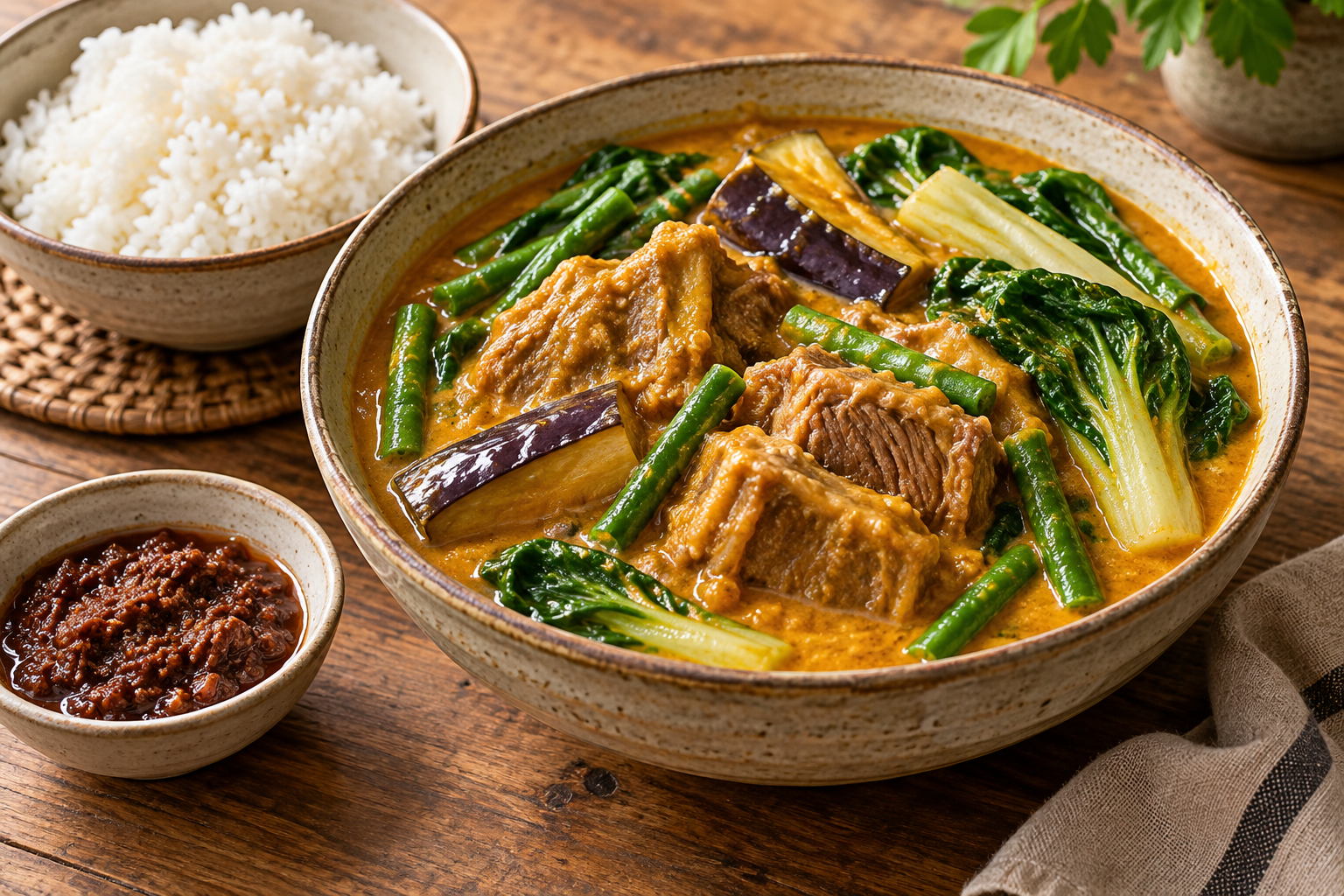
What is kare-kare?
Kare-kare is a Filipino stew of tender meat and vegetables in a thick, savoury peanut sauce coloured with annatto. Oxtail is a celebrated choice, while beef shank or chuck, tripe, pork hock, seafood, tofu and crisp pork versions also appear in Filipino kitchens. Eggplant, long beans, banana blossom and pechay or bok choy are common vegetables. The dish is usually served with steamed rice and bagoong alamang, a fermented shrimp condiment, on the side.
This Filipino kare-kare recipe uses oxtail, unsweetened peanut butter, toasted rice flour, annatto and vegetables that Australian cooks can find through large supermarkets, butchers and Asian grocers. It makes six generous servings and takes about 3 hours 30 minutes, including 25 minutes of preparation. Most of that time is a gentle simmer while the oxtail becomes fork-tender.
Kare-kare is intentionally milder than a chilli-hot curry. Its interest comes from beefy broth, peanut flavour, tender meat, vegetables and the salty contrast of bagoong. Let each diner decide how much condiment to add.
Read the Australian guide to bagoong →Explore the beginner’s guide to Filipino food →
Ingredients for six servings
For the meat and broth, use 1.4 kg oxtail pieces, one brown onion cut into quarters, 2.5 litres water and one teaspoon whole black peppercorns. Oxtail varies in size, so ask the butcher for pieces of broadly similar thickness. You will later reserve about 1.25 litres of the cooking liquid. Skim foam during the early simmer and top up with hot water if the meat is no longer covered.
For the sauce, prepare 250 g unsweetened smooth peanut butter, 35 g plain rice flour, two teaspoons annatto powder, four garlic cloves finely chopped, two tablespoons neutral oil, and salt and ground black pepper to taste. Check the peanut butter label: a product with added sugar can make the sauce noticeably sweet. Plain rice flour is practical here; toast it gently until beige and aromatic before mixing it with cool broth so it disperses without lumps.
For the vegetables, use two Lebanese eggplants cut into thick diagonal pieces, 250 g snake beans cut into 5 cm lengths, and two bunches baby bok choy halved lengthways. A drained 400 g tin of banana blossom is optional. Serve the finished stew with steamed rice and sautéed bagoong alamang on the side. Bagoong is not suitable for people avoiding crustaceans and can be salty, so provide it separately rather than stirring it through the communal pot.
How to make Filipino kare-kare
Tenderise the oxtail, prepare the vegetables, then build the peanut sauce with the reserved broth. Keep the cooked vegetables out of the pot until the end so they retain shape and colour.
1. Simmer the oxtail until tender
Put the oxtail in a large heavy pot and cover with the water. Bring it just to the boil, skim away the grey foam, then add the quartered onion and peppercorns. Reduce the heat to a very gentle simmer, cover partly and cook for 2½ to 3 hours. Turn the pieces occasionally and add hot water when needed. The meat is ready when a fork enters easily and the larger pieces are beginning to loosen from the bone.
Lift the oxtail into a bowl. Strain the broth, discard the onion and peppercorns, and skim excess fat. Measure 1.25 litres broth; add hot water if you are short. If cooking a day ahead, refrigerate the meat in its broth promptly, then lift away the solidified fat before continuing.
2. Cook the vegetables separately
While the meat finishes, bring a wide saucepan of water to the boil. Blanch the snake beans for about two minutes, the bok choy for one minute and the drained banana blossom for two minutes, lifting each into a colander. Pan-fry the eggplant in one tablespoon of the oil over medium-high heat until golden and just tender, working in batches if necessary. Set all the vegetables aside.
These timings are guides rather than rigid rules: the pieces should be tender enough to eat but still hold their shape. They will warm again in the sauce. Avoid boiling everything together for a long period, which can leave the beans dull, the bok choy limp and the eggplant collapsed.
3. Toast the rice flour and mix the sauce
Place the rice flour in a dry frying pan over low to medium heat. Stir continuously for three to five minutes, until it smells nutty and turns a light biscuit colour; remove it before it darkens. Whisk the toasted flour and annatto powder with 250 ml of the measured cool or lukewarm broth until smooth.
Heat the remaining tablespoon of oil in the cleaned stew pot. Cook the garlic for about 30 seconds without browning it. Add the remaining broth and return the oxtail to the pot. Bring to a gentle simmer, whisk in the rice-flour mixture, then stir in the peanut butter a spoonful at a time. Simmer uncovered for 10 to 15 minutes, stirring often, until the sauce coats the back of a spoon.
4. Finish and serve
Taste before adding salt because the condiment served at the table will supply considerable seasoning. Add a little salt and black pepper if the sauce needs it. Fold in the eggplant, beans, bok choy and banana blossom and simmer only until hot, about two to three minutes. Add a splash of hot water if the sauce becomes too thick to move around the vegetables.
Transfer the kare-kare to a warm serving bowl. Give each diner steamed rice and a small separate portion of bagoong alamang. The condiment should accent a mouthful rather than dominate the whole plate.
Why the sauce works
The sauce should be rich and cling to the meat without becoming a stiff peanut paste. Oxtail supplies body to the broth as connective tissue softens during the slow simmer. Peanut butter contributes flavour and emulsion, toasted rice flour thickens the liquid, and annatto provides the familiar yellow-orange colour without making the dish hot.
Traditional and family methods vary. Some cooks toast and grind whole peanuts and rice; others use peanut butter and rice flour for convenience. Some season the pot with fish sauce, while others keep the base restrained because bagoong is served alongside. This version favours accessible ingredients and a separate condiment, not a claim that every household makes kare-kare in the same way.
Australian substitutions that keep the recipe useful
If oxtail is unavailable, use 1.2 kg beef chuck cut into 5 cm pieces. Begin checking it after about 1½ hours, although the exact time depends on the cut. Beef shin is another slow-cooking option. The broth and mouthfeel will differ from bone-rich oxtail, but the peanut sauce and vegetable method still work.
Snake beans may be replaced with green beans. Baby bok choy is an accessible stand-in for pechay, while two medium globe eggplants can replace Lebanese eggplant if cut into sturdy chunks. Banana blossom contributes character but may be omitted when you cannot source it. Annatto powder is also sold as atsuete or achiote; it colours the sauce but is not a substitute for chilli powder or curry powder.
Use smooth, unsweetened peanut butter. Crunchy peanut butter changes the texture but is workable if that is all you have. Do not replace peanut butter with a different nut or seed spread for a guest with an allergy unless that person has confirmed the alternative is safe for them and every other ingredient and utensil is managed appropriately.
Troubleshooting kare-kare
If the oxtail is chewy, it needs more time rather than higher heat. Keep it at a quiet simmer and test the thickest pieces every 20 minutes. Vigorous boiling can make the liquid cloudy and break up smaller pieces before the large ones are tender.
A thin sauce may simply need another five minutes uncovered. If it remains watery, mix one teaspoon toasted rice flour with two tablespoons cool broth, whisk it in and simmer. For an overly thick sauce, add hot broth or water gradually. If the sauce tastes flat, first check that it has enough peanut and a little salt, then taste a spoonful with rice and bagoong before heavily seasoning the whole pot.
Lumpy sauce usually comes from adding dry flour directly to hot liquid. Whisk toasted rice flour with cool broth first and add it while stirring. A greasy surface means the broth needed more skimming; remove visible fat with a shallow spoon before adding the peanut butter.
Allergens and dietary requirements
Kare-kare contains peanut by design, and that cannot be treated as a minor garnish. Bagoong alamang contains crustacean. Some commercial peanut butter, stock, annatto mixes and sautéed bagoong products may contain or carry warnings for other allergens, so read every label each time. Food Standards Australia New Zealand advises people with food allergy to disclose it clearly when eating away from home and to ask specifically about allergen content and cross-contact.
Serving bagoong separately lets diners control salt and means the peanut stew itself need not contain seafood, but it does not make the meal safe for someone with a serious crustacean allergy if shared spoons, preparation surfaces or serving dishes allow cross-contact. Likewise, removing visible peanuts cannot make kare-kare peanut-free. For catered events, provide dietary information when enquiring and confirm the current menu and handling arrangements directly with the business.
Cooling, storing and reheating leftovers
Divide leftovers into shallow containers and refrigerate promptly instead of leaving a deep pot to cool on the bench. FSANZ’s business standard uses a two-stage cooling target: from 60°C to 21°C within two hours, then from 21°C to 5°C within four more hours. At home, shallow portions and space for cold air to circulate are practical ways to cool a thick stew quickly.
Store the vegetables separately when convenient so they do not soften further. Reheat only the amount needed, quickly and until piping hot throughout, stirring the dense sauce so there are no cold pockets. FSANZ advises avoiding repeated reheating. Add a little water before reheating because rice flour and peanut butter make the chilled sauce firmer. Follow safe storage guidance and use refrigerated leftovers within a few days.
What to serve with kare-kare
Steamed white rice is the essential partner because it carries the peanut sauce and balances the intensely savoury bagoong. A crisp side can provide contrast to the tender stew. At a larger Filipino spread, lumpiang Shanghai, pancit or pork crackle may sit alongside it, but kare-kare is substantial enough to anchor the meal by itself.
For a Bunbury family event, plan the stew, rice, condiments and dietary labels as one service. Keep the bagoong spoon separate, identify the peanut-containing dish clearly and avoid promising a menu item until availability is confirmed with Hernandez Asian Delights.
Make crisp lumpiang Shanghai →Order Hernandez pork crackle →
The key to a good Filipino kare-kare recipe
Give the meat enough time, keep the vegetables bright and adjust the peanut sauce with broth rather than rushing it. Serve rice and bagoong separately so every diner can build the balance they prefer. The result should be tender, nutty and savoury, with distinct vegetables and a sauce that flows from spoon to rice.
Once you understand that structure, substitutions become easier to judge. Change the beef cut or use accessible greens if needed, but protect the dish’s defining relationship between slow-cooked protein, vegetables, peanut-thickened sauce, annatto colour and the salty condiment at the table.
Compare another slow-cooked Filipino beef dish →Explore more Filipino recipes and guides →
Frequently asked questions
Is kare-kare a curry?
Kare-kare is a Filipino stew with peanut-thickened sauce, annatto, meat and vegetables. It may be compared with curry because of its colour and consistency, but it does not use a standard curry-powder flavour profile and is generally mild rather than chilli-hot.
Can I make kare-kare without oxtail?
Yes. Beef chuck, beef shin, tripe, pork hock, chicken, seafood, tofu and crispy pork versions exist. For this recipe, 1.2 kg beef chuck is the easiest substitute; begin checking it for tenderness after about 1½ hours.
Why is bagoong served with kare-kare?
The fermented shrimp condiment adds a salty, savoury contrast to the rich but restrained peanut sauce. Serving it on the side lets each diner control the amount. It contains crustacean and must be managed carefully for allergies.
How do I thicken kare-kare sauce?
Simmer it uncovered first. If it is still thin, whisk one teaspoon toasted rice flour with two tablespoons cool broth, add the slurry while stirring and simmer for several minutes. Avoid adding dry flour directly to the hot sauce because it can form lumps.
Is kare-kare spicy?
Kare-kare is usually mild and nutty rather than chilli-hot. Annatto provides colour, not chilli heat. Individual recipes and condiments vary, so ask about the specific dish if heat or an ingredient matters to you.
Keep exploring Filipino food and culture
Taste it in Bunbury
Bring Filipino flavour to your next gathering.
Explore catering from Hernandez Asian Delights or visit Michael and the team at 36 Charles Street, Bunbury.