· 10 min read
Filipino Beef Caldereta Recipe: A Rich Stew for Australian Kitchens
Cook a rich Filipino beef caldereta recipe with tender beef, tomato, liver spread and vegetables, plus Australian ingredient and food-safety guidance.
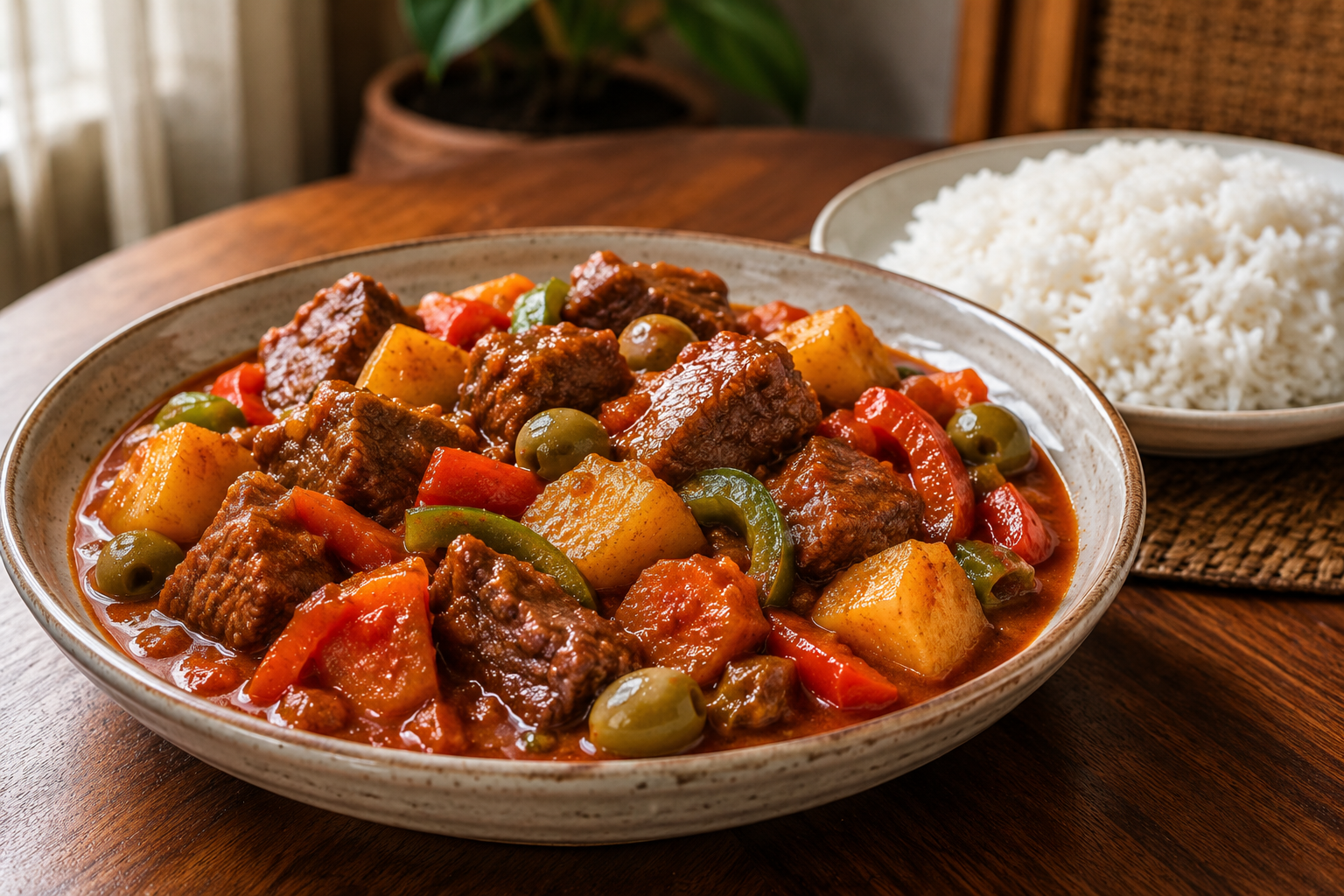
Filipino beef caldereta recipe: the short answer
Beef caldereta, also written beef kaldereta or kalderetang baka, is a Filipino stew in which cubes of beef are braised until tender in a rich tomato sauce. Potatoes, carrots, capsicum and green olives give the pot colour and substance. Liver spread brings savoury depth and helps thicken the sauce, while chilli supplies a heat level that each cook can adjust.
This Australian home-cook version serves six and follows the core sequence used by established Filipino recipe writers: marinate and brown the beef, gently braise it in tomato and stock, add firm vegetables in time to cook without collapsing, then finish with liver spread, olives and capsicum. Allow about 25 minutes to prepare, 30 minutes to marinate and 1½–2 hours to cook, because the tenderness of the beef—not the clock—decides when it is ready.
Caldereta is a flexible family of dishes rather than one universal formula. Goat, beef, pork and chicken versions exist, and cooks differ over cheese, peas, peanut butter, olives and the kind or amount of chilli. The recipe below is a practical beef version, not a claim that every region or household makes it this way.
Start with the beginner’s guide to Filipino food →Build a Filipino pantry in Bunbury →
What is caldereta—and how is it different from other Filipino stews?
SBS Food traces the name to the Spanish word caldera, meaning cauldron, and describes kaldereta as a stew that may use beef, chicken, pork or goat with vegetables including carrots, potatoes, capsicum and green olives. Its sauce is characteristically tomato-based, savoury and spicy, commonly enriched with liver spread; some cooks also add cheese.
That helps distinguish it from several visually similar Filipino tomato stews. SBS explains that menudo commonly uses pork and liver with small-cut vegetables and may be sweeter; mechado traditionally centres on larded beef and often gains tang from soy and acid; afritada is usually a simpler fried-meat-and-vegetable tomato stew. These are useful guideposts, not rigid borders. Family practice, local ingredients and regional cooking mean dishes can overlap.
Goat is closely associated with caldereta, but beef is now a widely used alternative. Published Filipino beef versions differ in seasoning and method, reinforcing that no single pot represents every household.
Ingredients for six servings
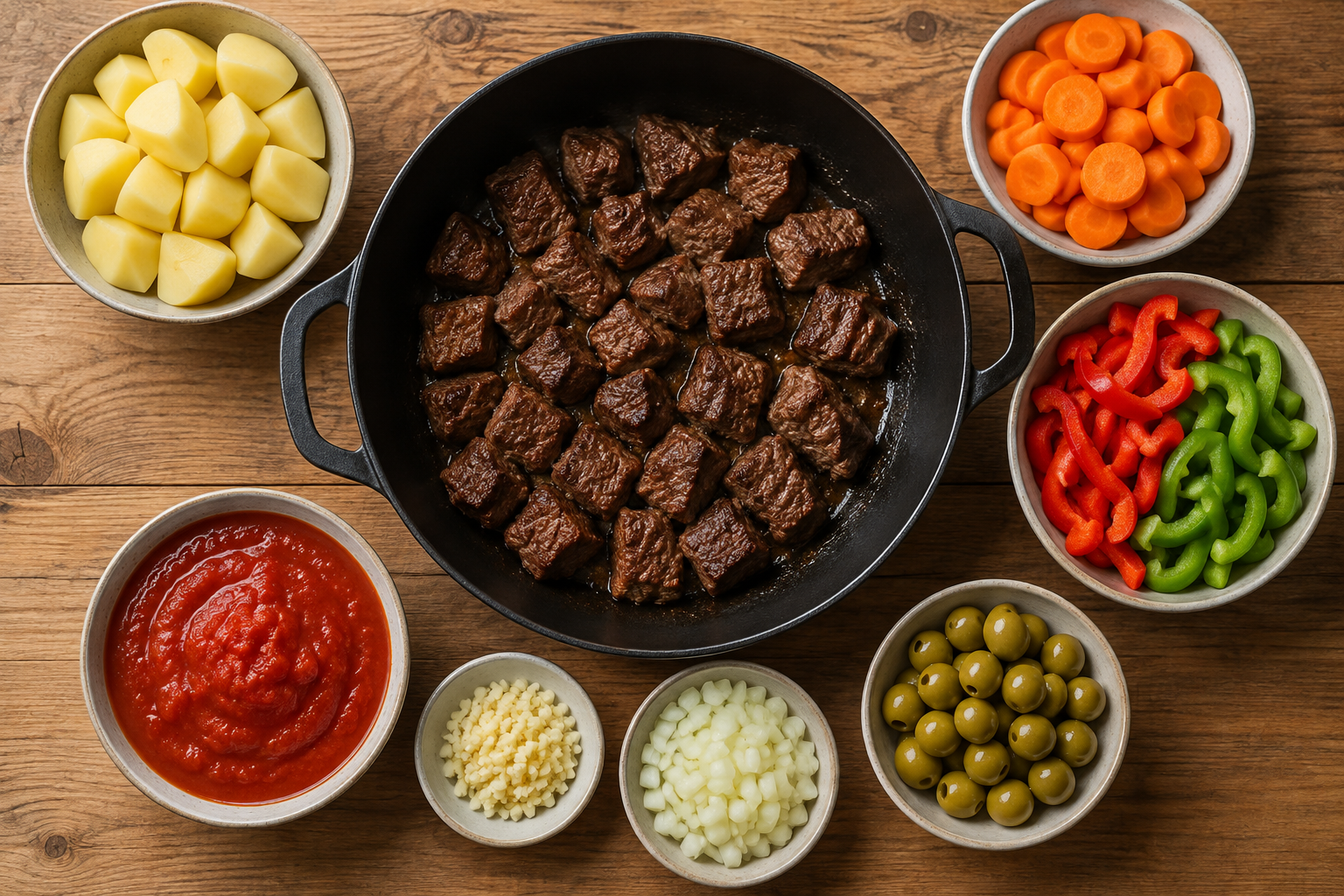
Use 900 g beef chuck or another braising cut, cut into roughly 4–5 cm cubes; 60 ml soy sauce; 3 garlic cloves, finely chopped; 1 brown onion, chopped; 60 ml neutral cooking oil; 250 ml plain tomato sauce or passata; 500 ml unsalted or reduced-salt beef stock; 3 dried bay leaves; 300 g potatoes, peeled and cut into even chunks; 250 g carrots, cut into chunks; 110 g pitted green olives; 120 g liver spread; 1 teaspoon chilli flakes; 1 small red capsicum and 1 small green capsicum, deseeded and cut into chunks; black pepper; and salt only after tasting. Serve with steamed rice if you wish.
Chuck is a useful supermarket choice because its connective tissue softens during a slow, moist cook. Pre-cut ‘stewing beef’ can work, but pieces from different muscles may become tender at different times. Keep the cubes similar in size, pat them dry before browning and leave a little surface fat for flavour while removing any hard gristle you can easily reach.
Choose a plain tomato product rather than a pasta sauce already flavoured with Italian herbs. Stock, soy sauce, olives and liver spread all contribute salt, so reduced-salt stock gives you more control. Liver spread is the ingredient that most clearly marks this version as caldereta; check the tin or jar because meat, cereal, milk or other ingredients vary by manufacturer.
Prepare the beef and vegetables before the pot gets busy
Put the beef and soy sauce in a non-reactive bowl, turn to coat and refrigerate for 30 minutes. While it marinates, chop the vegetables, measure the liquids and drain the olives.
Lift the beef from the marinade and pat it dry; keep the marinade for the stock. Use a clean plate for browned meat, and wash hands, boards and knives after handling raw beef.
For vegetables that keep their shape, heat half the oil in a heavy casserole. Briefly brown the potatoes and carrots, then transfer them to a clean bowl. This optional step helps prevent them dissolving into the sauce.
How to cook beef caldereta
Return the casserole to medium-high heat and add enough of the remaining oil to film the base. Brown the beef in batches, leaving space between pieces. Crowding traps steam and prevents a good crust. Transfer each batch to a clean plate. Reduce the heat to medium, add the onion and cook until softened, then stir in the garlic for about one minute without letting it burn.
Return all the beef and its resting juices. Pour in the tomato sauce, stock, reserved soy marinade and bay leaves, scraping the base of the pot to release the browned flavour. Bring to a gentle boil, then lower the heat, cover with the lid slightly ajar and simmer gently. Check and stir occasionally. Add a little hot water if the liquid reduces before the beef is tender.
Start checking at 75 minutes, but expect a braising cut to need 1½ hours or longer. A cube should yield easily when pressed with a fork; simply reaching a particular minute does not make tough beef tender. Keep the simmer calm, because a hard rolling boil can tighten the meat and break the sauce before the connective tissue has had time to soften.
When the beef is almost tender, add the browned potatoes and carrots. Simmer for about 15–20 minutes, or until a knife enters them easily without the pieces falling apart. Stir in the liver spread and chilli flakes until no streaks remain, then cook uncovered for 8–10 minutes so the sauce becomes glossy and lightly thickened.
Add the capsicum and olives for the final 2–3 minutes. They should be hot and just tender, with some colour and shape left. Remove the bay leaves. Taste before adding salt; the soy, stock, olives and liver spread may already provide enough. Add black pepper and, if needed, a small splash of hot water to loosen an over-thick sauce.
Find Filipino pantry ingredients at the Hernandez store →
How to control the richness, salt and chilli
Caldereta should taste full and savoury, but not automatically salty. Begin with reduced-salt stock and taste only after adding the olives and liver spread. If needed, salt-free liquid and tomato can dilute an over-salted sauce.
One teaspoon of chilli flakes gives a noticeable but manageable starting point for many households. Use less for a mild table or serve chopped fresh chilli separately; use more only when you know your diners enjoy it. Removing seeds from fresh chillies can reduce some heat, but chilli varieties vary, so tasting and gradual adjustment are more reliable than counting pods.
Some versions melt grated cheddar into the sauce, while others use peanut butter or neither. SBS records cheese as an optional garnish, and Panlasang Pinoy discusses peanut butter as a regional variation. Either changes flavour and allergen status: cheese introduces milk, while peanut butter introduces peanut. This recipe keeps both optional so the tomato, liver spread and beef remain clear.
Troubleshooting tender beef and a balanced sauce
If the beef is still chewy, it usually needs more gentle time rather than higher heat. Add enough hot water or stock to keep the pieces partly submerged, cover and continue simmering in 15-minute intervals. A lean quick-cooking steak cut can dry out before becoming succulent, which is why chuck, shank or another braising cut is the safer choice.
If the potatoes are soft before the beef, they went in too early or were cut too small. Lift them out carefully and return them near the end next time. If the sauce is thin after the beef is tender, remove the lid and simmer gently, stirring more often. The liver spread also thickens the liquid, so judge the final consistency only after it has been added.
For advance cooking, stop when the vegetables are just tender because they soften further while the stew cools and reheats. Caldereta often tastes integrated the next day, but improvement in flavour does not replace safe cooling and storage. Divide a large pot into shallow containers instead of leaving it to cool slowly on the bench.
Allergens and ingredient substitutions in Australia
This recipe cannot be assumed gluten-free, dairy-free, soy-free or suitable for any other dietary need. Soy sauce contains soy and often wheat. Stock, tomato sauce and liver spread are formulated products whose allergens and additives vary. In Australia, read the complete ingredients list and the plain-English ‘Contains’ statement required for declared allergens.
Tamari is not automatically gluten-free, and a gluten-free soy sauce does not solve a soy allergy. If serving someone with an allergy, check every label each time, use clean equipment and consider cross-contact in the kitchen. Ask the person what is safe rather than promising suitability based on a substitution list online.
If liver spread is unavailable, specialist recipes mention blended liver pâté or peanut butter, but these are flavour variations rather than exact replacements. Pâté can contain milk, wheat, egg or alcohol; peanut butter contains a major allergen. The most honest approach is to name the version you made and disclose its ingredients.
Serving, cooling and reheating safely
Serve caldereta hot with steamed rice, placing extra chilli on the side if diners have different tolerances. A spoonful of sauce over rice is part of the pleasure, so keep the rice plain enough to balance the stew. For a shared meal, use a clean serving spoon and avoid returning utensils that have touched diners’ plates to the casserole.
Food Standards Australia New Zealand advises keeping perishable food at 5°C or colder and hot cooked food above 60°C. Its two-hour/four-hour rule counts all time between those temperatures: under two hours, food may be refrigerated for later; between two and four hours, use it immediately and do not return it to the fridge; after four hours, discard it.
To cool a large batch, FSANZ’s business guidance specifies cooling from 60°C to 21°C within two hours and then to 5°C within a further four hours. Shallow containers and smaller portions help heat escape. Reheat quickly until steaming hot throughout; for hot holding, FSANZ says to reach at least 60°C, ideally within two hours, and advises against repeated reheating.
Rice needs the same attention. HealthyWA warns that cooked rice held too long between 5°C and 60°C can become unsafe and reheating may not destroy toxins already produced. Cool leftovers quickly and refrigerate promptly.
Planning caldereta for a Bunbury gathering
For a party, calculate portions alongside the whole menu rather than multiplying this six-serve recipe blindly. A table with rice, noodles, spring rolls, vegetables and another main needs less caldereta per person than a simple stew-and-rice dinner. Ask guests about allergies and chilli tolerance before finalising ingredients.
Hernandez Asian Delights can help Bunbury and South West hosts plan Filipino food for a gathering. Menu items, package details and availability can change, so use the current catering page or request a tailored quote instead of assuming this home recipe is a catering offer.
If pairing the meal with Hernandez pork crackle, keep it on its own platter with a separate utensil and name both dishes clearly.
Explore Filipino catering packages →Request a tailored catering quote →Order Hernandez pork crackle →Add crispy lumpia to your Filipino menu →
Frequently asked questions
Is it caldereta or kaldereta?
Both spellings are used. ‘Kaldereta’ reflects Filipino spelling, while ‘caldereta’ is also widely recognised and connects to the Spanish-derived name. Searches for beef caldereta, beef kaldereta and kalderetang baka generally refer to the same Filipino stew family.
What cut of beef is best for caldereta?
Choose a braising cut such as chuck or shank. These cuts contain connective tissue that softens during slow, moist cooking. Lean steak cuts can become dry, while mixed supermarket stewing beef may cook unevenly if the pack contains several muscles.
Can I make beef caldereta without liver spread?
You can make a tomato beef stew without it, but the result will lose a flavour and thickening element strongly associated with many caldereta versions. Filipino recipe specialists suggest pâté or peanut butter in some variations; check allergens and describe the substitution honestly.
How do I stop the potatoes becoming mushy?
Cut them into even, generous chunks, brown them briefly first and add them only after the beef is nearly tender. Start checking early and remove the pot from the heat when a knife enters the potato easily but the edges still hold their shape.
Can beef caldereta be cooked the day before?
Yes, provided it is cooled and stored safely. Divide the stew into shallow containers, refrigerate promptly according to FSANZ temperature guidance and reheat rapidly until steaming hot throughout. Avoid repeated reheating, and cook the vegetables only until just tender before cooling.
Keep exploring Filipino food and culture
Taste it in Bunbury
Bring Filipino flavour to your next gathering.
Explore catering from Hernandez Asian Delights or visit Michael and the team at 36 Charles Street, Bunbury.