· 8 min read
Easy Adobong Kangkong Recipe: Filipino Water Spinach
Cook a quick Filipino vegetable dish with water spinach, garlic, vinegar and soy sauce, with practical Australian ingredient substitutions and serving ideas.
What is adobong kangkong?
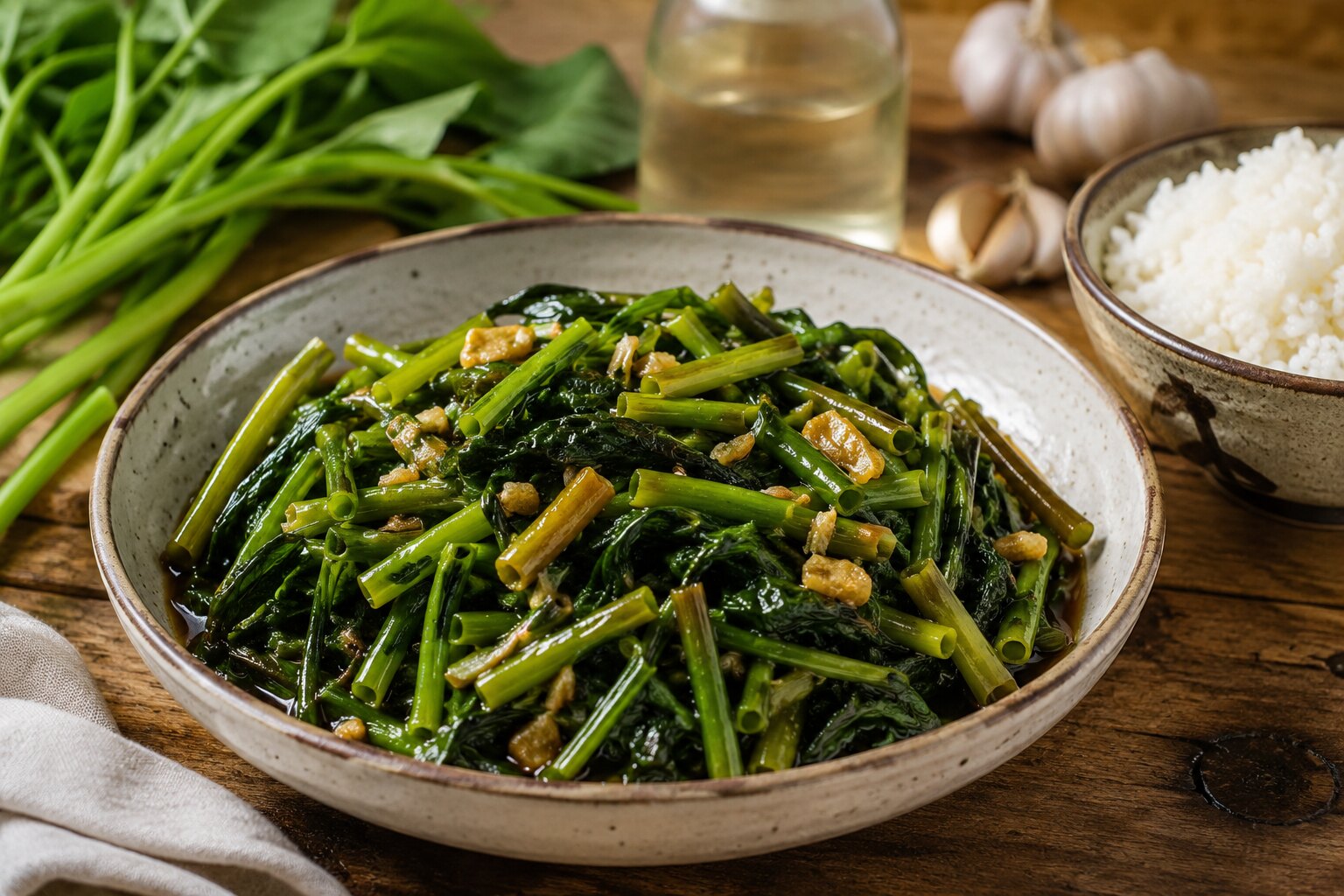
Adobong kangkong is water spinach cooked using the familiar savoury-sour adobo approach. Kangkong provides tender leaves and hollow, slightly crisp stems, while garlic, vinegar, soy sauce and black pepper build the sauce. It is quick, affordable and naturally suited to rice. The Philippine National Nutrition Council includes adobong kangkong among practical family dinner ideas and also identifies it as one of the many vegetable expressions of adobo.
This recipe is not presented as the only correct version. Filipino households vary the ratio of vinegar to soy, the amount of sauce and the addition of onion, chilli, pork or other ingredients. Our version is a simple meat-free starting point designed for an Australian home kitchen. It serves four as a shared vegetable dish and takes roughly twenty minutes once the greens are washed. Read the full method first because kangkong cooks quickly and is best served without prolonged simmering.
Ingredients for four people
You will need one large bunch of kangkong, also sold as water spinach, morning glory or ong choy; four large cloves of garlic, finely chopped; one small brown onion, sliced; three tablespoons of neutral cooking oil; sixty millilitres of soy sauce; thirty millilitres of cane, coconut or white vinegar; up to one hundred and twenty-five millilitres of water; and freshly ground black pepper. Serve it with steamed rice. Optional additions include sliced chilli, a small pinch of sugar or fried garlic for finishing.
The National Nutrition Council’s published family recipe uses one bunch of kangkong, onion, garlic, a quarter cup of soy sauce, an eighth cup of vinegar, optional water, oil and black pepper. We retain that basic balance while explaining how to adjust it. Soy sauces differ significantly in salinity, so start conservatively if using a dark or strongly flavoured brand. Use a vinegar you enjoy, but avoid heavily sweetened seasoned vinegar unless you deliberately want that result.
Choosing and preparing kangkong
Look for bunches with bright green leaves, crisp stems and no sour smell. A little wilting can be refreshed in cold water, but slimy leaves or blackened stems should be discarded. Kangkong is semi-aquatic and can hold soil or grit, so wash it thoroughly. Separate the leaves and tender tips from the firmer lower stems. Cut the stems into pieces about three to five centimetres long so they cook evenly.
Place the cut stems and leaves in separate bowls because the stems need a head start in the pan. Rinse both in several changes of clean water, then drain well. Excess water will dilute the sauce and cause hot oil to spit. If the lower stems feel fibrous, trim them away. The preparation may take longer than the cooking, but it is the difference between a clean, crisp dish and one that tastes gritty or becomes watery.
Step-by-step cooking method
Heat a wide frying pan or wok over medium heat and add the oil. Cook the garlic until aromatic and lightly golden, watching closely so it does not burn. Remove a spoonful for garnish if you like. Add the onion and cook until softened. Increase the heat slightly, add the kangkong stems and toss for one to two minutes. Pour in the soy sauce and half the water, then simmer briefly until the stems begin to soften but still retain bite.
Add the leaves and turn them through the hot pan. Pour the vinegar around the edge and allow it to come to a boil before stirring vigorously. This practical step lets the sharp raw aroma mellow. After about thirty seconds, toss everything together and cook only until the leaves have wilted. Add more water if you prefer extra sauce. Finish with black pepper, taste and adjust. Serve immediately with rice and the reserved fried garlic.
Why the order of cooking matters
Kangkong stems and leaves behave differently under heat. Adding them together often produces one of two poor results: tough stems with properly wilted leaves, or tender stems with overcooked leaves. Giving the stems a brief head start preserves both textures. A wide pan also helps moisture evaporate so the greens fry and simmer rather than steam into a grey-green mass.
Vinegar is equally important. If you reduce it too far before the greens enter, the flavour may become harsh and unbalanced. If you add it at the end without allowing it to boil, its aroma can dominate. The short uncovered simmer creates a tangy sauce while keeping the dish lively. There is no need to cook kangkong for a long time; carry-over heat continues softening the leaves after the pan leaves the stove.
How to balance the sauce
Taste the sauce with rice, not only from the spoon. It is designed as a viand, so it may seem assertive on its own. If it is too salty, add water a tablespoon at a time and simmer briefly. If it lacks brightness, add a small splash of vinegar and let it boil. If the acidity is too sharp for your household, a pinch of sugar can round the edges, but avoid turning the dish into a sweet glaze.
For more garlic flavour, use some garlic during cooking and crisp the remainder separately for the top. For heat, add sliced bird’s-eye chilli with the onion or serve chilli vinegar on the side. A teaspoon of sesame oil changes the profile and is not essential to the Filipino adobo base, though some home cooks enjoy it. Make one adjustment at a time so you understand how it changes the final balance.
Ingredient substitutions in Australia
Kangkong is commonly available at Asian grocers and some larger fresh-food markets. If unavailable, English spinach is the closest easy substitute for a weeknight version, although it lacks the hollow crunchy stems and cooks even faster. Chinese broccoli or choy sum can work with longer cooking, but the finished dish becomes a vegetable adobo rather than adobong kangkong in the literal sense. Separate thick stems from leaves regardless of the substitute.
Filipino cane or coconut vinegar gives a rounded character, but Australian white vinegar is workable. Apple cider vinegar is milder and fruitier; begin with less and adjust. Light or all-purpose soy sauce is easier to control than very dark soy. For gluten-free requirements, use a certified gluten-free tamari and check every packaged ingredient. For a soy-free version, a suitable alternative seasoning is possible, but it will be an adaptation rather than the classic flavour described here.
Variations and additions
A little diced pork belly can be browned before the garlic, turning the dish into a richer main viand. Prawns are another possible addition, but they should be cooked carefully and clearly disclosed for allergy safety. Tofu can make the meat-free version more substantial: fry firm tofu cubes until golden, remove them from the pan and return them after the vinegar has boiled. Mushrooms add savoury depth but also release water, so cook them before the stems.
Adobong kangkong can also be made without soy sauce in the spirit of adobong puti, using vinegar, garlic, pepper and salt for seasoning. The National Nutrition Council documents adobong puti as an adobo variation and identifies kangkong as another adaptable ingredient. Whichever direction you choose, keep the vegetable recognisable. Too many additions can bury the fresh texture that makes this dish useful as a counterpoint to grilled or fried food.
Serving, storing and food safety
Serve adobong kangkong hot with steamed rice, grilled chicken, fish, lumpia or another shared dish. It also works as a quick lunch with fried egg and rice. Spoon a little sauce over the rice rather than flooding the whole plate. If serving it as part of a larger Filipino meal, its acidity helps balance rich meat and fried textures.
Cool leftovers promptly and refrigerate them in a covered container. Eat within a short period and reheat until steaming. The leaves will soften further, so the dish is best on the day it is cooked. Do not leave cooked greens at room temperature for extended periods, especially during warm Western Australian weather. People with allergies must check soy sauce and any added sauces for wheat, soy, seafood or other declared allergens. When in doubt, use products with clear Australian labelling.
Troubleshooting common problems
If the dish is watery, the kangkong was probably not drained thoroughly, the pan was crowded or the heat was too low. Remove the greens briefly and reduce the sauce rather than continuing to cook everything into softness. If the stems are tough, they may have been too mature or were not given enough time before the leaves. Trim more of the lower stem next time and cut the remaining pieces smaller.
Burnt garlic produces bitterness that vinegar cannot hide, so restart the aromatics if it turns dark brown. A sauce that tastes flat usually needs either acidity or aroma, not automatically more salt. Add vinegar carefully, let it boil and finish with black pepper or crisp garlic. Keeping notes on the soy and vinegar brands makes the second attempt far easier because their strength varies considerably.
Why this recipe is a strong introduction to Filipino cooking
Adobong kangkong teaches several useful ideas in one pan: rice and viand are tasted together, acidity is a central seasoning, adobo can apply to vegetables, and texture depends on thoughtful sequencing. It also challenges the idea that Filipino food is only meat-heavy celebration food. Vegetables are part of everyday home cooking, and the adobo method can make simple produce deeply satisfying.
Once you are comfortable with this recipe, adjust the sauce to your family’s preference or try another adobo variation. Visit Hernandez Asian Delights in Bunbury for kangkong, Filipino vinegar, soy sauce and advice on the brands Michael recommends. Cook the dish once exactly as written, then make notes. That is how a practical recipe becomes part of your own weeknight rotation while remaining honest about where the method comes from.
Keep exploring Filipino food and culture
Taste it in Bunbury
Bring Filipino flavour to your next gathering.
Explore catering from Hernandez Asian Delights or visit Michael and the team at 36 Charles Street, Bunbury.